

There’s something you’ve been meaning to do: a goal, a skill, a project.
You think about it constantly. You tell yourself you’re working on it.
But if you actually measured the hours you’ve put into it over the past year - removed the feeling of “working hard” and just looked at the real number - it would shock you.
That was me on a flight back from Ireland, flipping through my journal from the past year.
Page after page, I’d written the same thing: recruit a CMO.
It was the single highest-leverage move for the company to grow, and I knew competitors were gaining ground every week I delayed.
Then I pulled up my calendar...
I’d spent 2 hours a week, at the most, on finding a CMO.
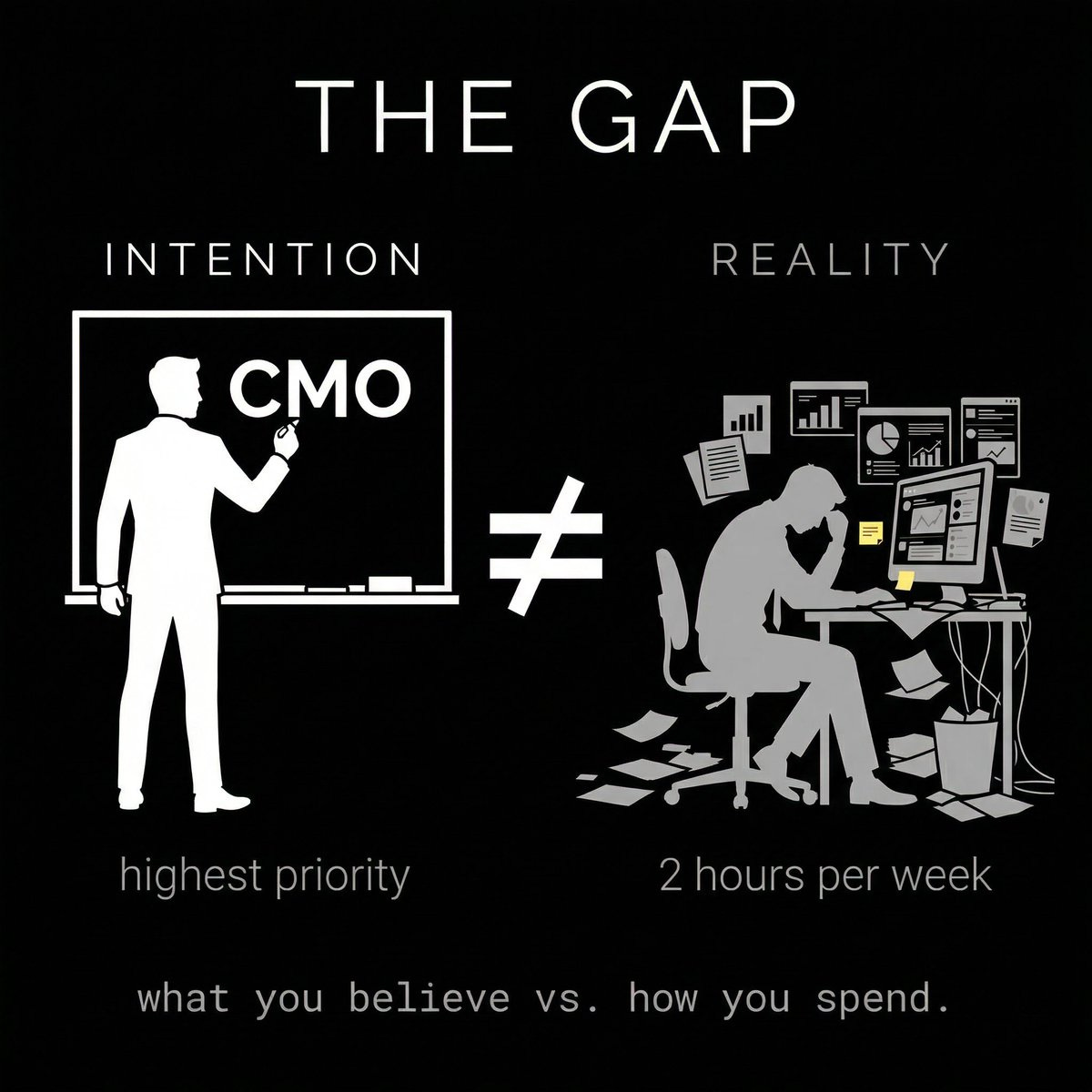
The thing I flagged as the most important priority in my business, I was barely doing.
The gap between what I believed mattered and how I actually spent my time was staggering.
Years pass. You get older.
And the goals you thought you were chasing haven’t moved an inch.
This is called time slippage: where how you think you spend your time is not how you spend your time.
In the next few minutes, I’ll break down exactly why this happens and the 3-step protocol I use to close this gap.
I. THE HIDDEN PROBLEM
We tend to think that the thing blocking us from achieving our goals is procrastination, distraction, or a lack of willpower.
In reality, it’s something more insidious.
You know how Venmo and your bank account log every transaction automatically?
Time doesn’t work that way. It’s not calculated unless you calculate IT.
And as a result, we’re so bad at allocating time that, if it were money, we’d be in future-threatening debt.
Days and weeks slip by without matching action to intention.
Suddenly, you’re years older but no closer to achieving the thing you said was most important.
The reason this happens is a phenomenon researchers call effortless exertion.
When you scroll social media for two hours, it doesn’t feel like two hours.
The platform is engineered to trigger dopamine with intermittent, unpredictable rewards - likes, comments, new content - while requiring minimal cognitive effort.
Hours vanish in what feels like minutes.
This same mechanism also powers flow state and extreme productivity:
A cocktail of neurotransmitters (dopamine, serotonin, norepinephrine, endorphins) diminishes the perception of effort and distorts your sense of time.
It’s how programmers code for 6 hours straight and how athletes push their bodies for hours in pure bliss.
The problem is that effortless exertion doesn’t care whether the activity is productive or not.
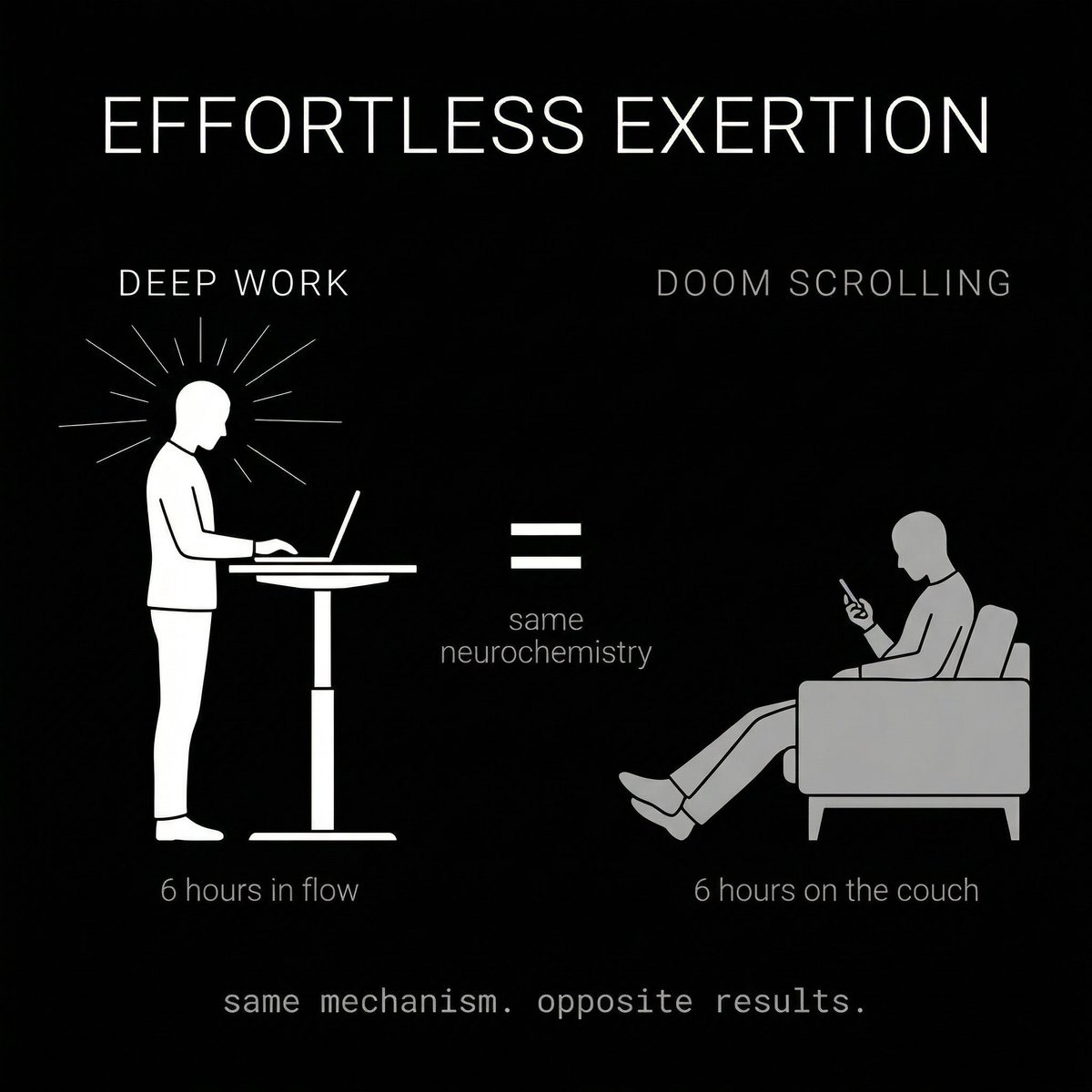
The same neurochemistry that lets Alex Honnold climb 3,000 feet of sheer granite without ropes is the same neurochemistry that lets you binge Netflix for an entire Saturday.
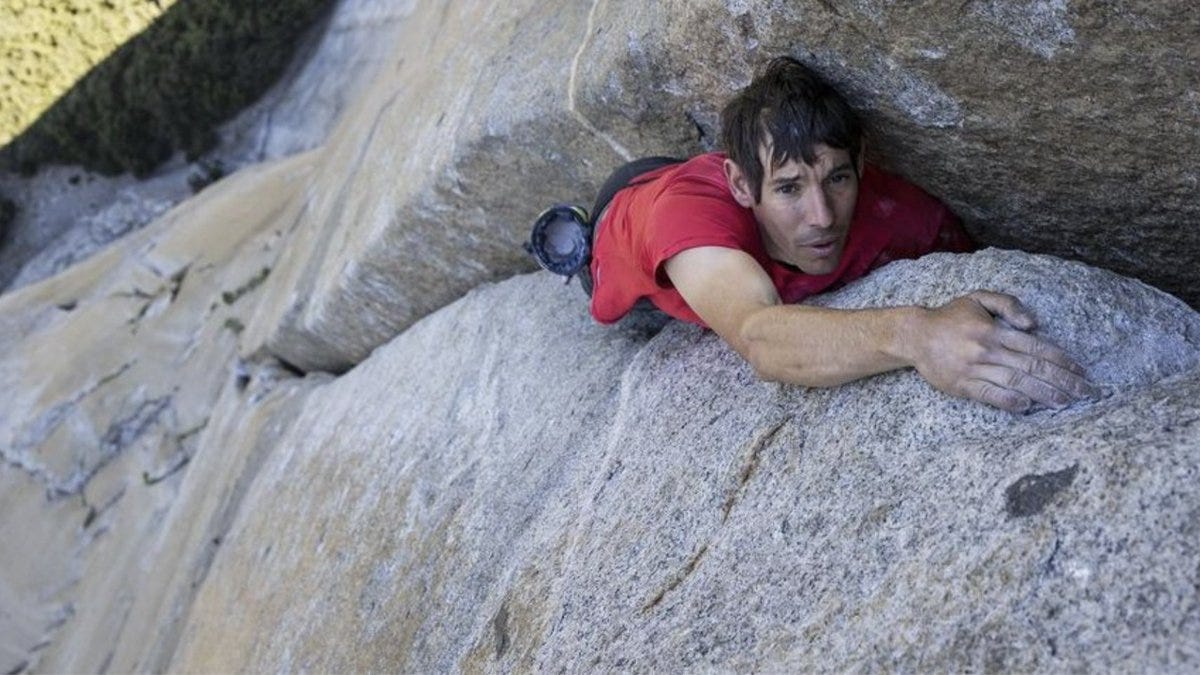
Worse: even though effortless exertion FEELS effortless, it fatigues the system.
You still burn through neurochemistry. So even unproductive effortless exertion leaves you with less time and energy.
Think of it like drinking soda - you increase your calorie load without feeling full.
Or credit card debt - each small purchase seems trivial until it compounds into something serious.
This is why time slippage is so dangerous.
You don’t notice the hours bleeding out.
And when they’re gone, they’ve also drained the neurochemical resources you needed to do your real work.
This isn’t something you can fix once.
It’s an ongoing gap to manage. You have to continuously measure the distance between your intentions and your actual time allocation.
The way to do this is to become a Temporal Architect.
II. THE TEMPORAL ARCHITECT
A Temporal Architect is someone with near-complete awareness of how they spend their time - like an accountant who knows where every penny goes.
A Temporal Architect sets the future in motion by allocating time in advance.
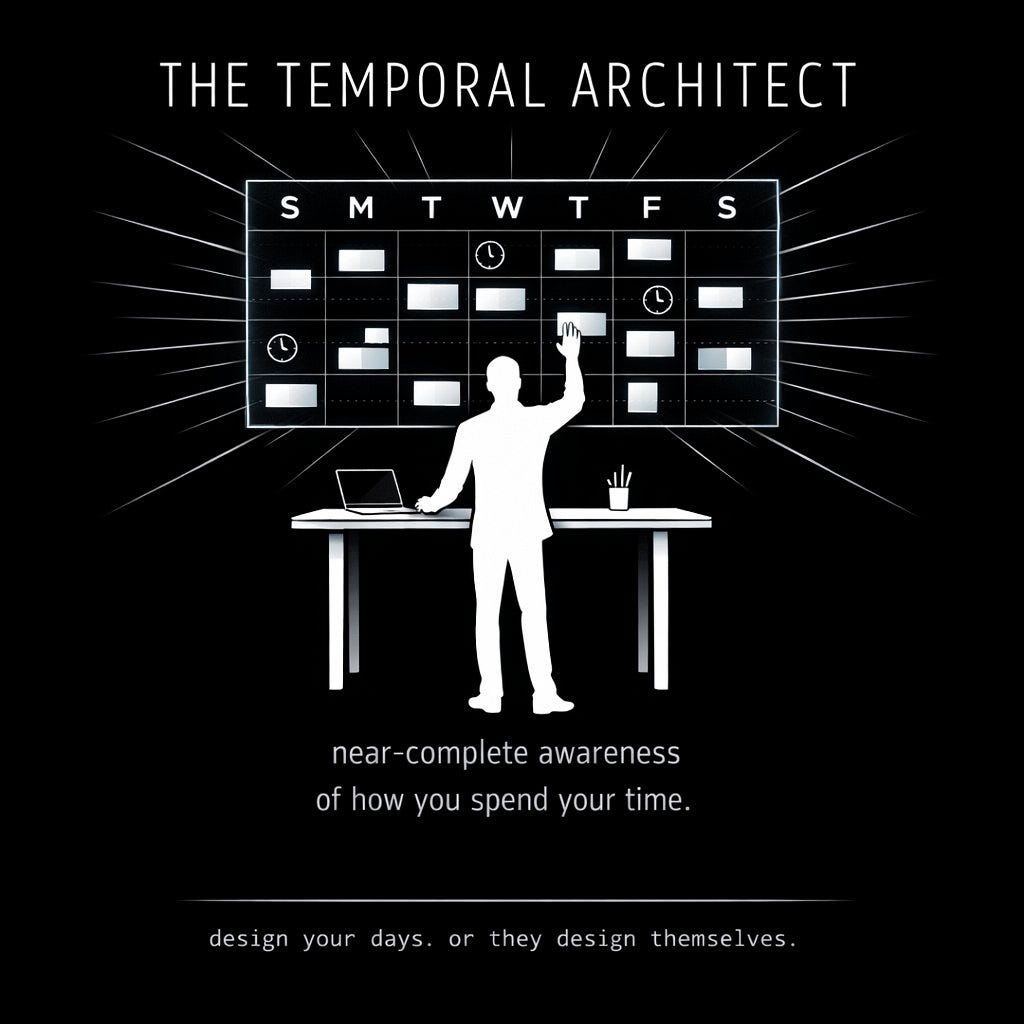
This closes the gap between intention and action, and directs effortless exertion toward productive work instead of letting it bleed into waste.
The core practice is deceptively simple: track your time.
But this does more than just show you where your hours go.
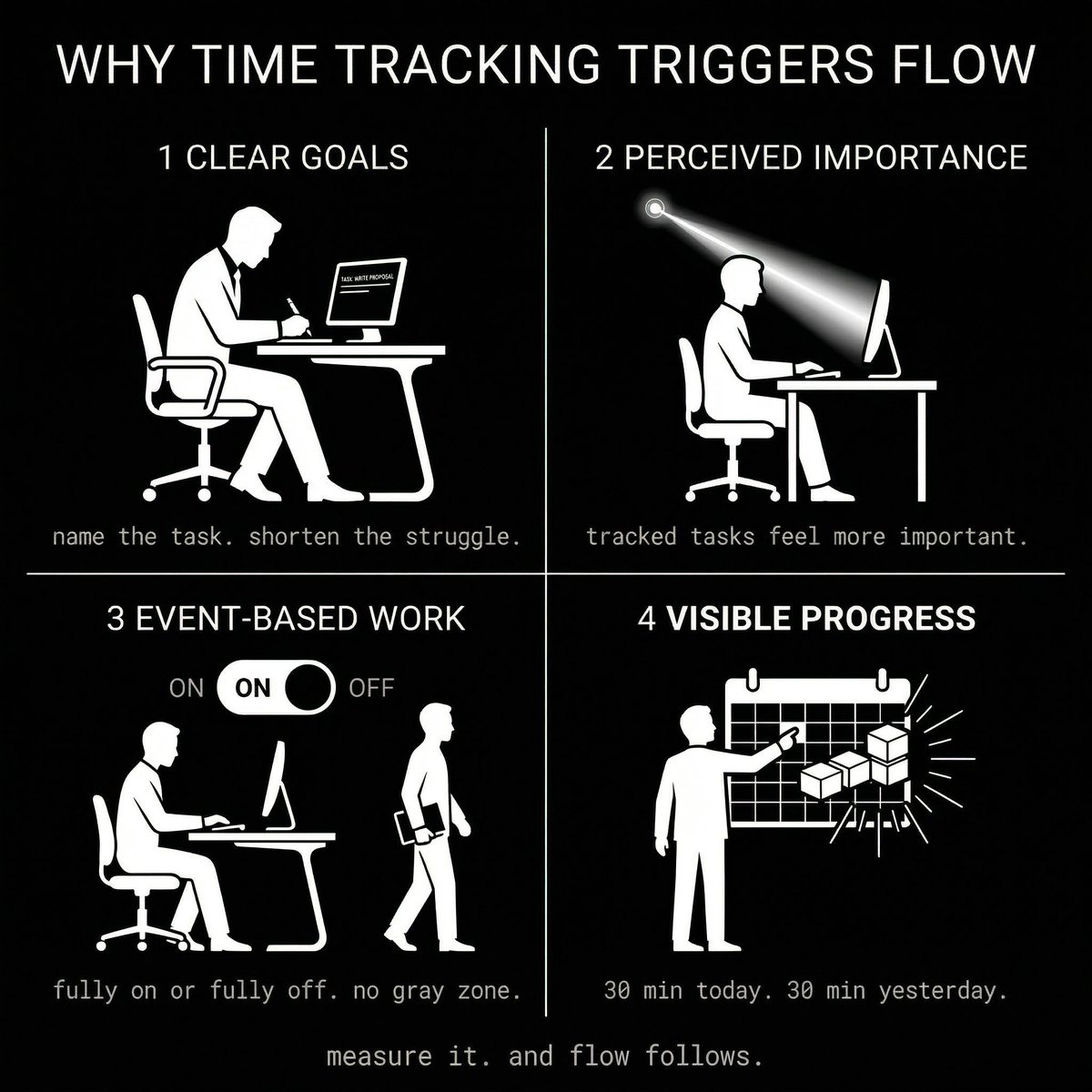
Time tracking triggers flow state in several ways:
1 - It sets clear goals by naming the task before you start, which shortens the struggle phase and helps you drop into flow faster.
2 - It raises perceived importance (research from Ulm University shows that when you perceive a task as important, you sustain focus more easily).
3 - It forces event-based work - fully on or fully off, eliminating the gray zone where effort drains but productivity flatlines.
4 - It makes small increments visible: instead of “I didn’t work on the book today,” you see “I put in 30 minutes today, yesterday, and the day before.”
III. THE 3-STEP PROTOCOL
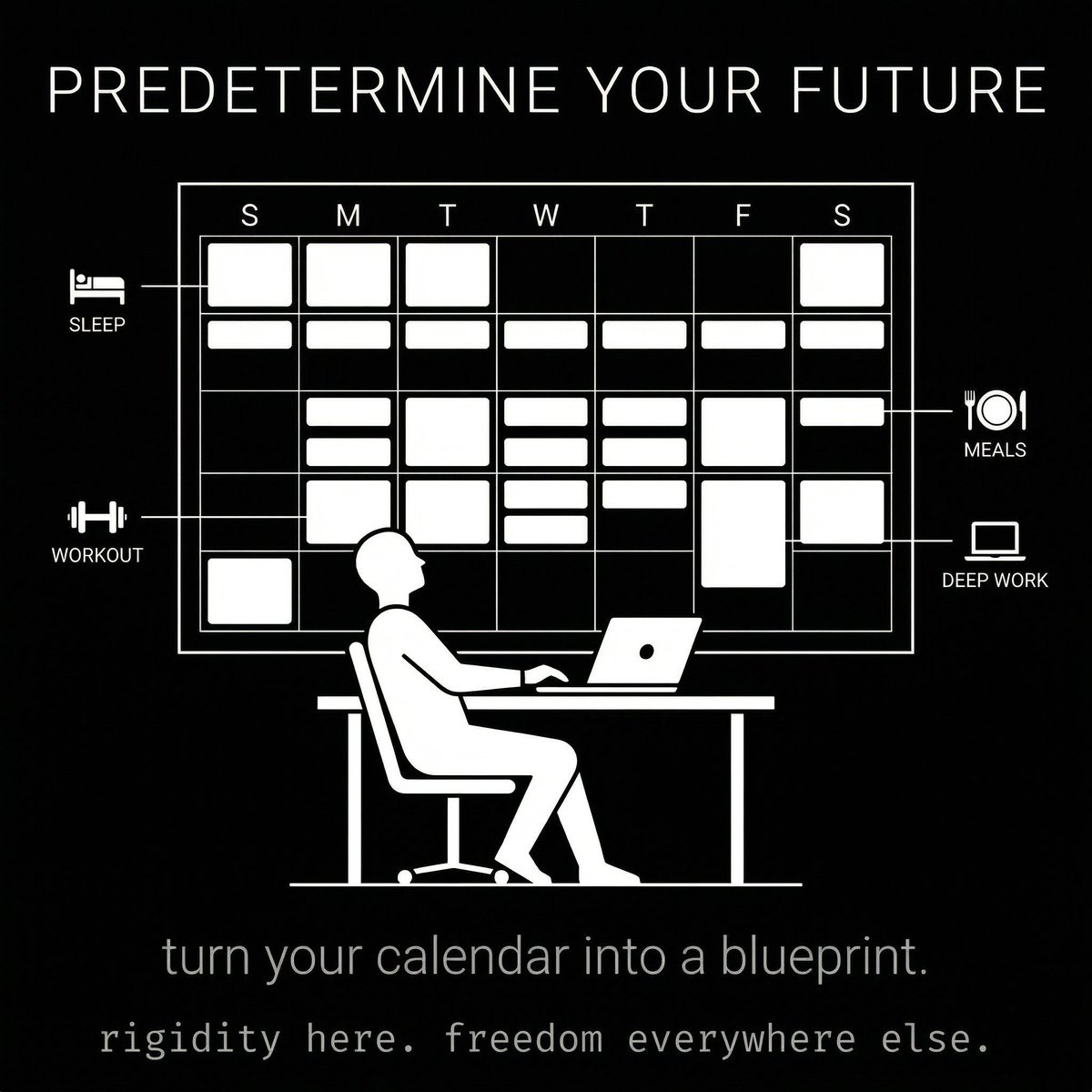
STEP 1: PREDETERMINE YOUR FUTURE
Pre-set chunks of your day and week so you don’t have to repeatedly decide when and how to do what.
The idea: turn your calendar into a liberating constraint. Rigidity in one area for flexibility in another that matters more.
Do this on a Sunday when your mind is sharp and you have unhurried, quiet hours.
Zoom out.
Architect what an ideal day looks like. Ground it in reality based on your actual demands and constraints. Then set up recurring events for your high-priority activities. Lock them in. Protect that time from meetings and distractions.
Unlike standard time tracking, you track 24/7 - including sleep. List everything you do regularly: sleep, workouts, meals, recurring meetings. Block them all in your digital calendar as recurring events.
This ensures routine activities are pre-tracked, so logging everything else takes far less effort.
STEP 2: LOG YOUR TIME RETROACTIVELY
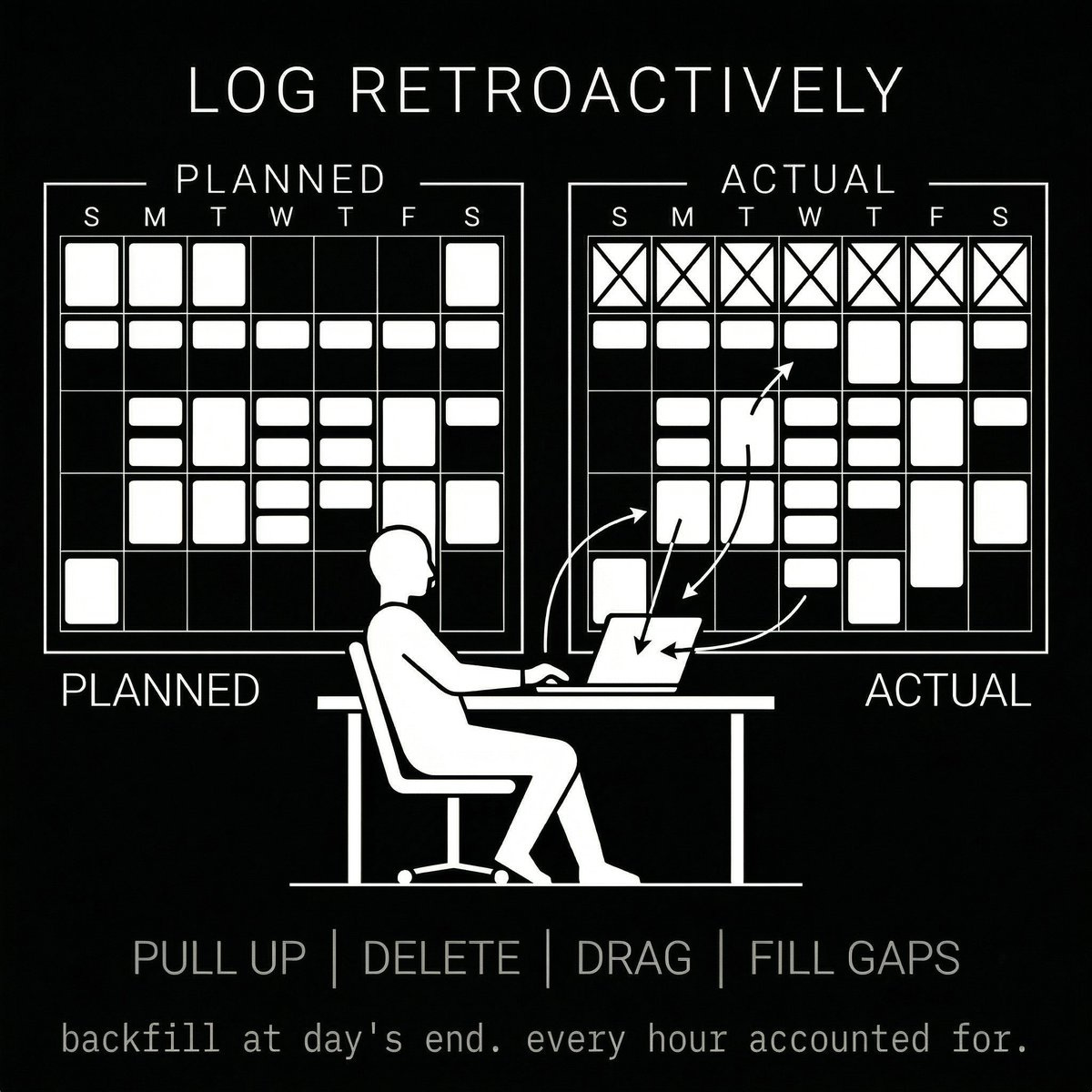
On top of recurring events, track every hour of your time.
The key: this is time logging, not live time tracking. It’s retroactive backfilling of your calendar, not a proactive process. You already did the proactive part.
This is what made time tracking actually stick for me. I could never do it before because I’d forget to start a timer before a task.
This would happen over and over, so only a few things got tracked.
Instead, at the end of each work day:
Pull up your calendar
Delete any events you didn’t do or attend
Drag events to match how long they actually took
Fill any gaps so all time is accounted for
STEP 3: CATEGORIZE EVERYTHING
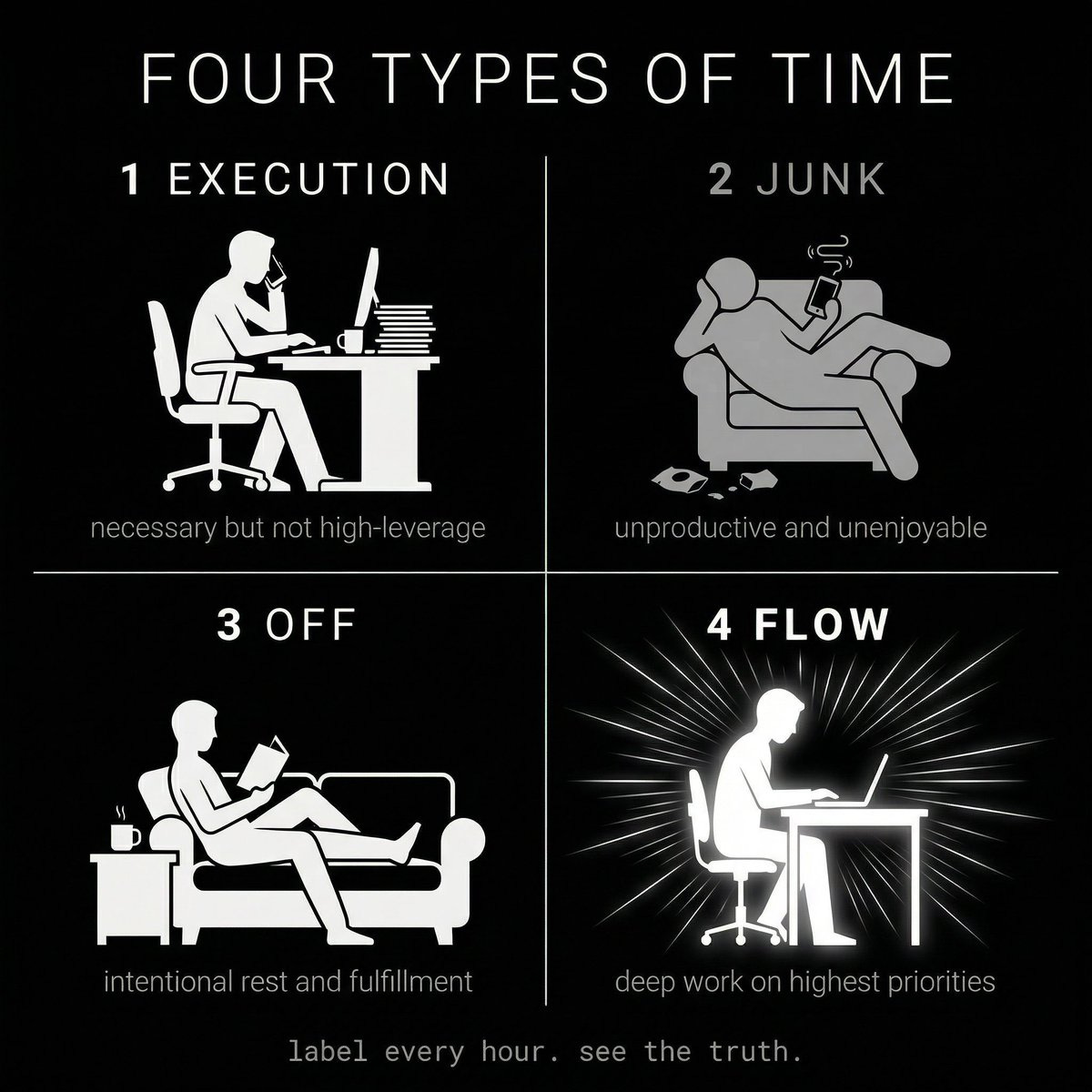
As you log, you’ll notice all time falls into four categories:
1: Execution-Time - Necessary work that advances your goals, but not high-leverage. Emails, meetings, admin.
2: Junk-Time - Pure waste. Unenjoyable and unproductive. Doom-scrolling, waiting in lines, fixing things that broke.
3: Off-Time - Intentional rest. Not productive, but fulfilling. Family, hobbies, recovery.
4: Flow-Time - Deep work on your highest priorities while in a flow state. This is where exponential progress happens.
Label each calendar event with a number (1-4) at the start of the title
“4 - Building financial model”
“3 - Lunch with Sarah”
“2 - Social media”
“1 - Inbox and Slack”
At the end of your day or week, screenshot your calendar and drop it into an LLM with this prompt:
Prompt to copy:
Analyze my calendar screenshot. Each event is labeled 1-4 corresponding to these categories:
1: Execution-Time (necessary but not high-leverage work)
2: Junk-Time (unproductive, unenjoyable waste)
3: Off-Time (intentional rest and fulfillment)
4: Flow-Time (deep work on highest priorities)
Calculate the total hours I spent in each category. Give me the percentage breakdown.
Then tell me:
What patterns do you notice? Where am I leaking time? What one change would most increase my ratio of Flow-Time to Junk-Time?
IV. WHICH ARCHETYPE ARE YOU?
Track for one week, and you’ll see which of these three archetypes you are:
The Hustler: 50% Execution, 0% Flow, 40% Junk, 10% Off. Always busy, never leveraged. Grinding without compounding.
The Sloth: 10% Execution, 0% Flow, 60% Junk, 30% Off. Low output disguised as “rest.” Time bleeds out unnoticed.
The Entrepreneurial Athlete: 20% Execution, 60% Flow, less than 5% Junk, 20% Off. Protects deep work. Recovers deliberately. Compounds relentlessly.
You want the time allocation of an Entrepreneurial Athlete. And you can’t get there without seeing where you are now.
Tracking takes about ten minutes of an eight-hour workday. Barely 2%. If that makes you even 5% more productive, it’s a win. But with flow, we see 500% boosts in productivity. The math isn’t close.
V. WHAT CHANGES
Intimidating projects shrink. That task you’ve been avoiding? It often takes far less time than you imagined. The dread was worse than the work.
Your sense of control increases. Knowing how long things actually take lets you set boundaries and sink into tasks calmly - a precondition for flow.
You realize you have more time than you thought. It’s not that you lack time. It’s that it’s misapplied. Seeing where it leaks is a shock. But on the other side of that shock is liberation.
Your intentionality compounds. It’s rare to do a great workout and then binge eat. Similarly, it’s rare to complete a deep flow session and then doom-scroll five minutes later. Earlier efforts compound. The flywheel spins faster.
Your forecasting improves. When you know how long things take, you scope projects accurately. This prevents procrastination by turning what felt intimidating into a clear, bounded commitment.
VI. THE STUFF OF LIFE
All of life is time. Every day that passes is gone forever.
Without tracking, you could be unknowingly misallocating your entire life - wondering why you’re tired, unfulfilled, or stuck.
As psychologist Mihaly Csikszentmihalyi put it:
“To live means to experience - through doing, feeling, thinking. Experience takes place in time, so time is the ultimate scarce resource we have. Over the years, the content of experience will determine the quality of life.”
Track your time to reclaim your time.
Become a Temporal Architect.
This is the kind of insight I can’t find anywhere else. Thanks for sharing!
GReat framework on time slippage, but the neuroscience needs revision. You claim: "even unproductive effortless exertion leaves you with less time and energy" because both social media and deep work use the same neurochemistry.
This conflates different mechanisms:
1. Metabolic cost is NOT equal. Deep cognitive work consumes significantly more glucose than social media scrolling (which relies primarily on visual pattern recognition + emotional responses). fMRI studies show higher prefrontal cortex activation during complex tasks.
2. Neurotransmitter release differs fundamentally:
Social media: intermittent dopamine spikes (variable ratio reinforcement) → rapid desensitization
Flow state: sustained dopamine + serotonin + norepinephrine → more stable reward system
3. Ego depletion as a "resource" is contested. Modern research (Inzlicht, Kurzban) suggests the deficit isn't resource exhaustion, but motivation loss due to dopamine dysregulation—different mechanism entirely.
The real problem: After 6 hours of social media, you're demotivated because dopamine crashed. After 6 hours of flow work, you're metabolically fatigued. Same outcome (can't focus next), different causes.
Also: The Ulm University study on perceived importance—can you link the specific peer-reviewed source? I couldn't locate it.
The core insight about time tracking is solid. The neuroscience deserves more precision.