
Stop Overthinking Every Decision. Your Subconscious Already Has the Answer.
This is a form of effortless decision-making. The sort of decision-making that you get in flow state, which is an optimal state of consciousness where we feel and function at our best.

You’ve been agonizing over the same decision for days. Late nights replaying both options. Spending hours weighing pros and cons.
Meanwhile, there’s a network in your brain designed to solve exactly this.
It works faster, uses less energy, and arrives at better answers than your conscious mind ever could.
You’ve just never been taught how to activate it.
This is a form of effortless decision-making. The sort of decision-making that you get in flow state, which is an optimal state of consciousness where we feel and function at our best.
This article breaks down exactly how to access it.
I. THE PROBLEM WITH HOW YOU CURRENTLY DECIDE
In Ireland, your entire future hinges on a single week of exams at the end of high school.
Your performance during those few days determines what college you’ll get into, period.
So every moment leading up to that week is precious study time.
But there I was, fixated on what to major in instead of prepping for the tests that would determine my future.
I was torn between philosophy and business. Two paths that felt completely at odds.
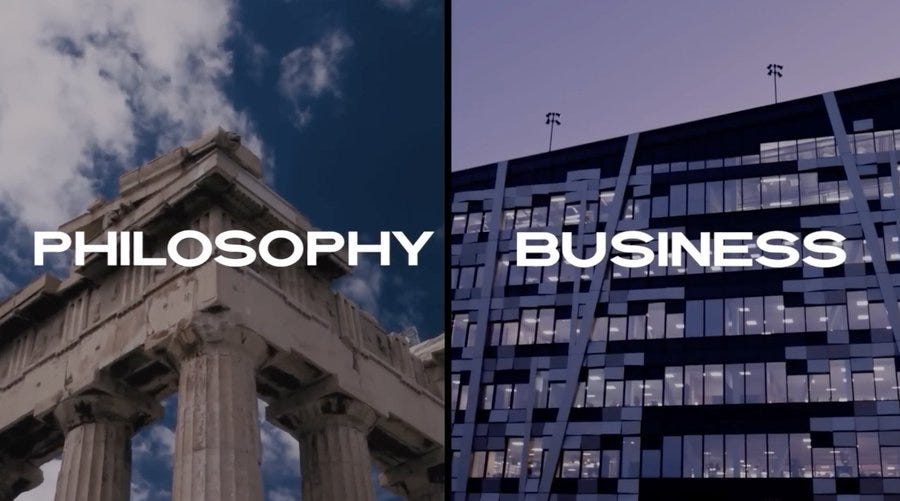
I made dozens of pros and cons lists that always seemed evenly split down the middle, never landing decisively on one side or the other.
I thought about it constantly, ruminating during class when I should have been taking notes, staying up late into the night staring at the ceiling.
The uncertainty ate away at me.
And this was just one decision as a teenager.
The problem wasn’t the decision itself. The real problem was my decision-making process in general.
I was relying on an analytical, deliberate form of decision-making, which blocked me from making decisions in a more effortless and intuitive way.
It turns out, I was relying on the wrong system in my brain.
II. THE TWO SYSTEMS: INTUITION VS. DELIBERATION
Israeli-American psychologist Daniel Kahneman discovered two modes of thinking (and thus deciding):

System One is an intuitive, automatic mode of thinking that’s fast and effortless. This is Intuition. It uses the subconscious.
It’s when a manager sees leadership potential in a junior employee, promotes them despite their lack of experience, and the employee thrives in the new role.
System Two is a conscious, logical, and deliberate mode of thinking that’s slow and effortful. This is Deliberation. It often shows up when you carefully weigh options and analyze the pros and cons of a decision.
The trouble is: we tend to over-index on System Two. And it slows us down, increases our stress, and degrades our performance.
This causes you to get stuck in self-doubt, which erodes your confidence, decreases your focus, and makes you prone to progress-sapping distractions.
Worst of all, this keeps happening. From one decision to the next, you get trapped in this cognitively draining loop of doubt.
This is what happened to me as a student in Ireland when trying to decide on my college major.
III. THE MOUNTAIN
Then one weekend, I went hiking in the Irish countryside to clear my head.
I started sprinting down a mountain trail, jumping between rocks.

As I ran down the hill, I entered an intense flow state.
The feeling of being “in the zone.” I was effortlessly navigating the rocky terrain by intuition alone.
The decision of where to place my feet on each precarious rock was automatic and unconscious.
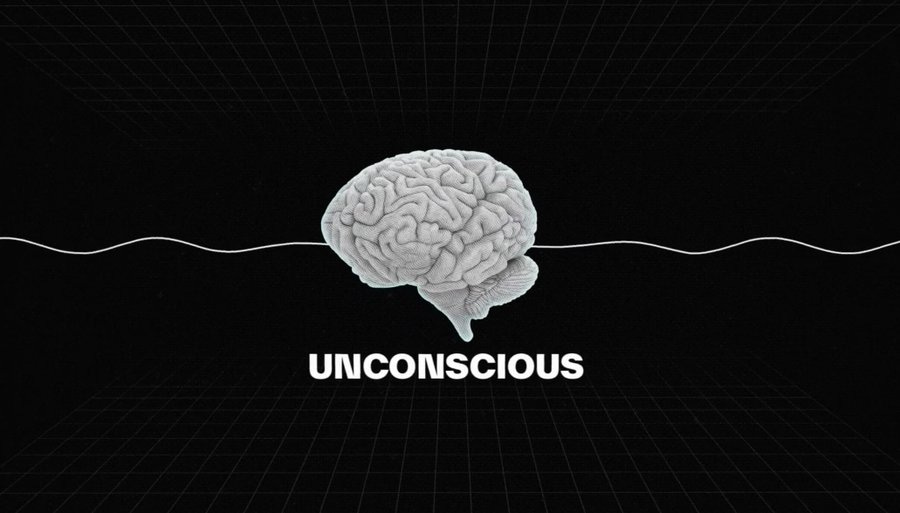
Each decision required no effort. In fact, it was as if there was no one there to consciously decide at all. It was just happening.
In this flow state, my prefrontal cortex (the region orchestrating our conscious and deliberate decision-making) was taking a back seat. This is called transient hypofrontality: a temporary quieting of the part of the brain that, during regular consciousness, would be intensely deliberating each step.
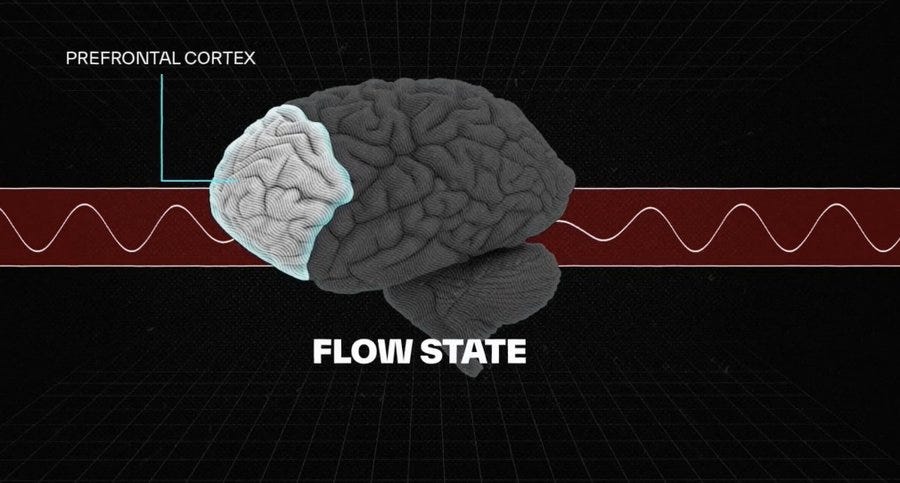
Instead, my System One thinking was in charge, jumping from rock to rock, making split-second decisions with an ease that felt almost like no decision-maker was present.
This disappearance of the “sense of self” is a key flow characteristic. When you are one with the wave, like the surfer, or one with the mountain, like I was that day, bizarrely, there is no “self”-consciousness present to make decisions in a System Two deliberate way.
So my brain was relying on faster, more efficient pattern recognition and instinct from lower brain regions like the basal ganglia and amygdala. This leads to more automatic, intuitive, System One thinking.
I reached the bottom of the mountain, exhilarated and amazed.
As I caught my breath, I couldn’t help but wonder: “Why can’t I make decisions about which way to go with college in the same intuitive, effortless way I navigated those rocks at top speed?”
Here I was agonizing over whether to study philosophy vs. business when moments ago I had intuitively navigated life-or-death consequences on the mountain.
One wrong step could have broken my neck, but the flow state led me to perfect decisions without thinking.
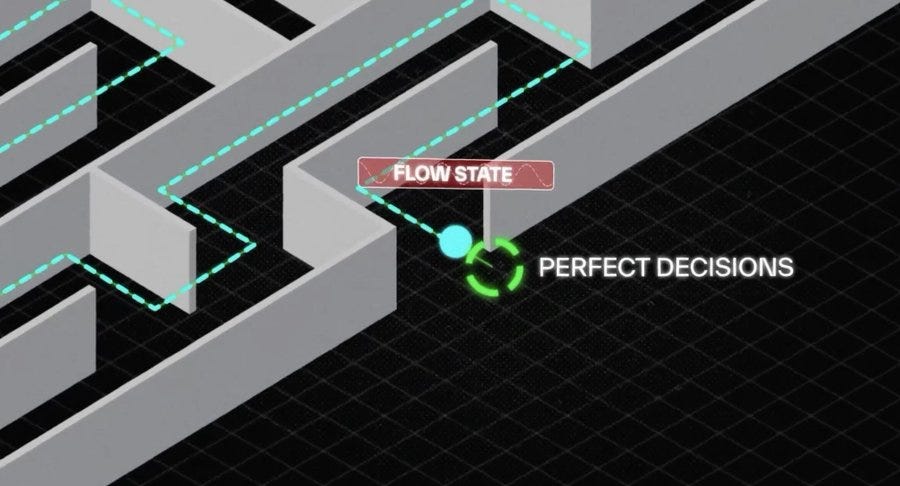
The stakes were much higher on the mountain, yet choosing a college major felt impossible.
I realized that the problem wasn’t my decision-making ability.
The problem was that I didn’t know how to apply that flow-like intuition to decisions outside of flow.
Even though my brain was clearly capable of doing so, as demonstrated by my sprint down the mountain.
IV. WHAT IF YOU COULD USE FLOW-STATE INTUITION ANYTIME?
Fast forward to today.
I now have 60 employees, two different businesses, and have to make 100x the number of decisions. To my teenage brain, the stakes are unimaginably higher.
If I was leaning on System Two (Deliberation), still making decisions the way I used to, it would be physically impossible for me to have time for anything but decision-making.
So I had to learn how to lean on System One (Intuition) and to balance both.
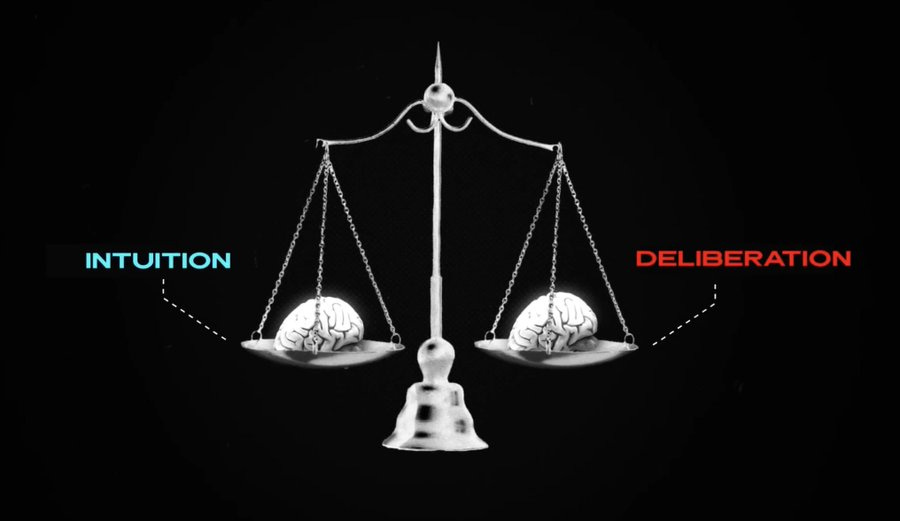
Here’s why this matters so much:
Flow is an optimal state of performance where we feel and function at our best. Much of the reason why we perform at such a high level while in flow is due to the near-perfect, intuitive decision-making that happens while in the state. It is System One, operating at its peak.
You know what this is like.
You’re public speaking, all eyes fixed on you. The next point hovers just out of reach... until you get into flow.
Suddenly, everything clicks. Words pour out with perfect timing, each phrase landing exactly as intended. Your voice rises and falls instinctively, your body moves without thought. It’s like the speech is delivering itself.

This is System One decision-making at its best. Insight and expression flow seamlessly with minimal conscious thought.
But here’s the thing:
There’s a way to tap into the high-level intuitive thinking of flow even outside of flow.
This is called flow-based decision-making.
V. FLOW-BASED DECISION-MAKING
Flow-based decision-making means taking the fast, flawless, intuitive decision-making that happens in flow and applying it to all choices.
It’s the perfect blend of System One and System Two.
Intuition and deliberation. It uses your subconscious, but you also get the most out of the conscious mind without it becoming an obstacle.
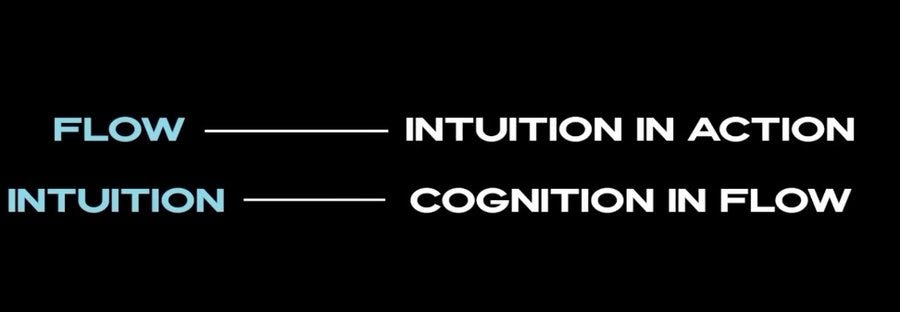
The result? You make more decisions, make them faster, and make them better... without expending unnecessary cognitive energy.
So how do we do this?
Here’s the step-by-step process to master flow-like decision-making so you can apply it everywhere, all the time.
VI. STAGE ONE: GIVE YOUR SUBCONSCIOUS A TARGET
A decision is nothing more than selecting a solution to a problem.
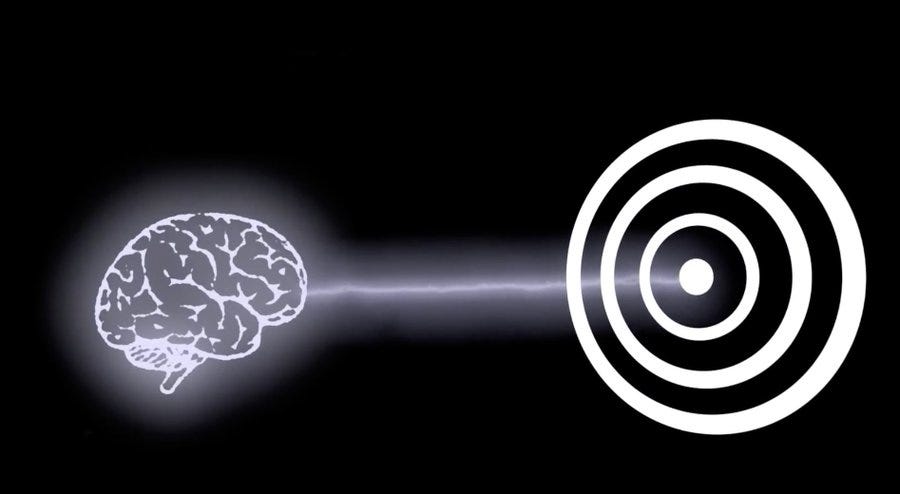
Think of the problem as a lock and the decision as the key. You can’t make a key that unlocks a lock if you don’t know the lock’s shape and structure.
And the same goes for flow-based decision-making:
You can’t solve a problem with a decision if you don’t know exactly what the problem is. Without identifying the root problem, you’re a surgeon in an operating room hacking away at the wrong organ.
In this way, your decisions are only as good as the precision with which you identify the problem.
This was evident during my sprint down the mountain. In a state of flow, I effortlessly navigated the precarious terrain through split-second decisions.
This hyper-fast intuition worked because the problem was unambiguously defined right in front of me: where to place my feet on each upcoming rock. The objective was crystal clear.
That’s the level of unambiguous clarity on the problem we’re trying to solve that’s needed.
This is how flow-based decision-making kicks in. With such an explicitly defined problem, both Systems One and Two (your conscious and subconscious) know exactly where to apply their efforts.
So when the root problem is vague, your mental resources scatter. But when sharply defined, your mind converges with laser focus, enabling fast flow-based decisions.
And if you don’t clarify the problem... You might be trying to solve a problem that doesn’t exist (or trying to solve a different problem).
Even as we speak, you might be blindly walking around trying to solve things you’ve spent no time trying to find out the root cause of. You end up perpetually trying to solve a problem that doesn’t exist.
It’s like furiously scooping water out of a sinking boat with a bucket, but you never look for the hole in the boat that’s causing the leak. The water keeps filling up, and you’re trapped in an endless loop of bucket-scooping.
It’s staggering when you think about the time we sink into tackling these phantom problems.
Separate the Symptom from the Problem
You don’t want to waste your flow-based decision-making on finding better tape to put over a leaky faucet when your entire plumbing system needs an overhaul.
To do this, list all variations of the problem you’re attempting to solve until you get to its core.
Example 1: The Car Decision
A while back, I was trying to figure out what car to buy. Seemed simple enough. Just compare models, right?
So I spent weekends test-driving new cars, comparing specs, and asking friends what they thought. Investing a bunch of brain cycles on this decision with System Two, deliberate thinking.
But one morning, as I sat in nonstop traffic trying yet again to get to work on time, it hit me. The real issue wasn’t what car to buy, but how to reliably get to work each day, no matter the traffic.
As soon as I reframed the problem from “choosing a Tesla or a Volkswagen” to “solving my transportation to work,” a whole new range of options opened up. I could carpool, bike, take public transit, or even just work from home.
Perceived problem (symptom): “Which car should I buy?”
Root problem: “How do I reliably get to and from work?”

Example 2: The Hiring Decision
Another time, I was having a hard time trying to decide whether to hire one person or another for a key role on my team. Both candidates seemed qualified in their own ways.
One candidate had great technical skills, but she had less experience. The other had tons of experience, but his tech skills weren’t as sharp.
In the meantime, customer support inquiries were building up. The pressure didn’t help; it made me second-guess the decision even more.
Then it dawned on me: what I really needed was just something to handle customer support.
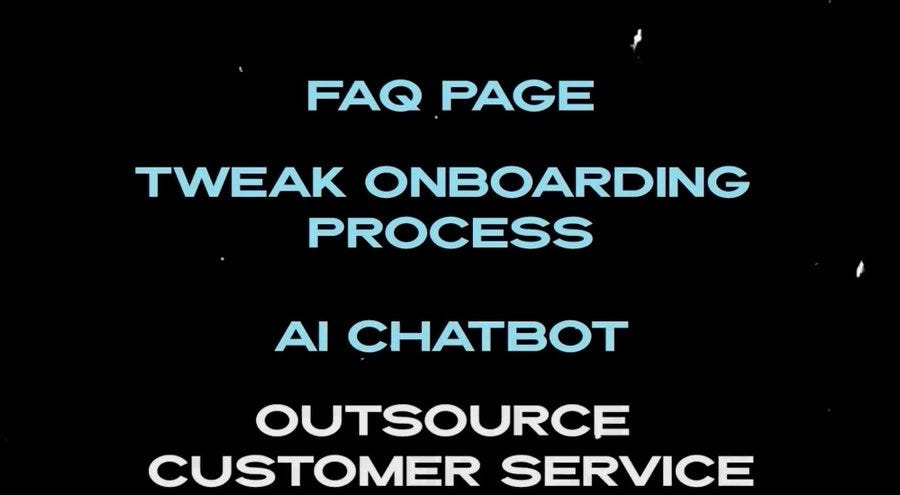
Once I realized that was the core problem, I could expand the options: set up an FAQ page, tweak the onboarding process to reduce customer queries, deploy an AI chatbot, or even outsource the whole customer service function.
Perceived problem (symptom): “Should I hire Person A or Person B?”
Root problem: “Ensure all customer inquiries are responded to.”
The key is drilling down to the actual underlying problem, not just the surface-level task.
Linger with the Problem Before Jumping to Solutions
Now, once you’ve separated the symptoms from the root problem, let yourself linger with the problem before jumping to solutions.
The critical mistake is to jump to solutions too fast, which limits all creativity and defeats the purpose of flow-based intuition.
Just as you don’t want to define the problem incorrectly, you don’t want to decide prematurely on a less effective solution. You’ve only just clearly defined the problem, and the brain’s pattern-matching abilities need time to find the best solution.
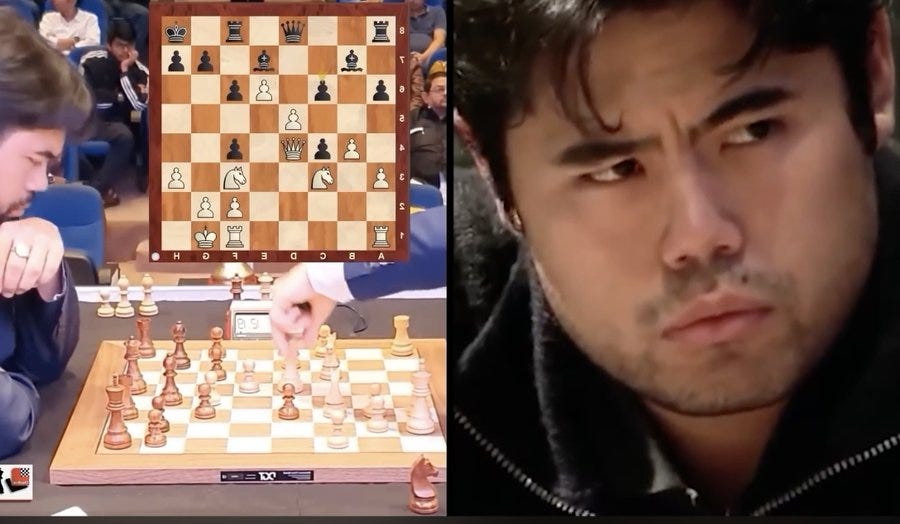
Spending insufficient time in the problem space narrows your “cognitive aperture,” limiting the range of solutions you can perceive.
Plus, when you define the true problem, it’s usually deeper than you thought. This vastly expands the possible solutions.
Spending time in the problem space is uncomfortable because, naturally, we want the problem to be solved. But rushing to a solution bypasses the essential “incubation period” (which we’ll cover in a moment). This is where your subconscious mind continues to process and examine a problem even when you’re not actively thinking about it.
By lingering with the root problem, you initiate the incubation period.
This is where the flow-based decision-making really kicks in.
VII. STAGE TWO: RECRUIT THE SILENT OPERATOR
Consider this analogy from Stanford neuroscientist David Eagleman:
The conscious mind can process the headline of a newspaper, while the subconscious mind can process the entire newspaper.
But what if there’s a way to bring the entire newspaper into your conscious awareness? Imagine how much better you’d be able to solve problems and make decisions.
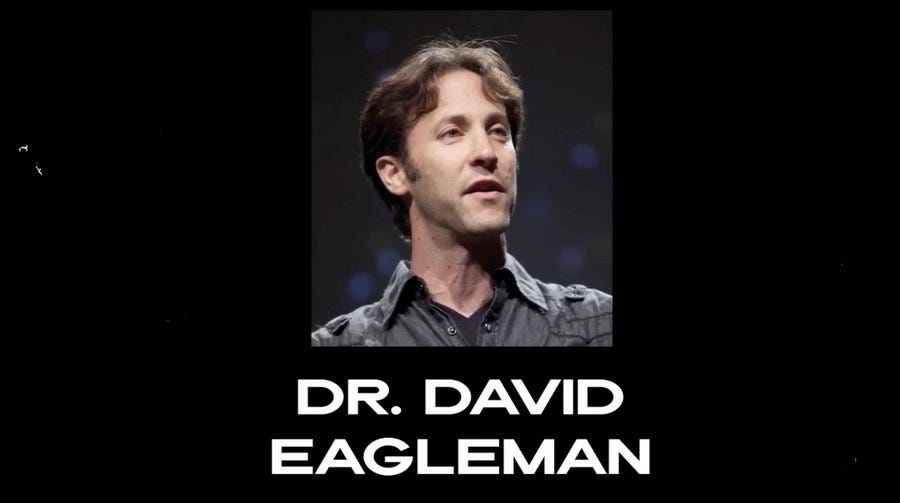
Here’s how you can.
So far, we’ve defined the root problem.
But the main purpose of defining the root problem is so we can pose the question. That is, the question our subconscious can mull on and pattern match and search for the answer.
This question is how we coax the rest of the newspaper to the surface.
For example, by going through the previous steps, let’s say you discover that the problem isn’t just “How can we increase leads?” but actually, “How can we increase net free cash flow?”
Now, you need a question that you can feed your subconscious so that it can help solve the problem for you.
That question might be: “What are the most effective ways to generate and sustain positive cash flow in the next quarter?”
By formulating this question, you activate your adaptive subconscious... the brain’s rapid-response unit that psychologist Timothy Wilson calls the “silent operator”. An evolved, high-speed information-processing system that excels in pattern recognition.
The silent operator rapidly scans your environment, memories, and social cues. When you get a “gut feeling,” that’s your silent operator, built from a lifetime of experiences.
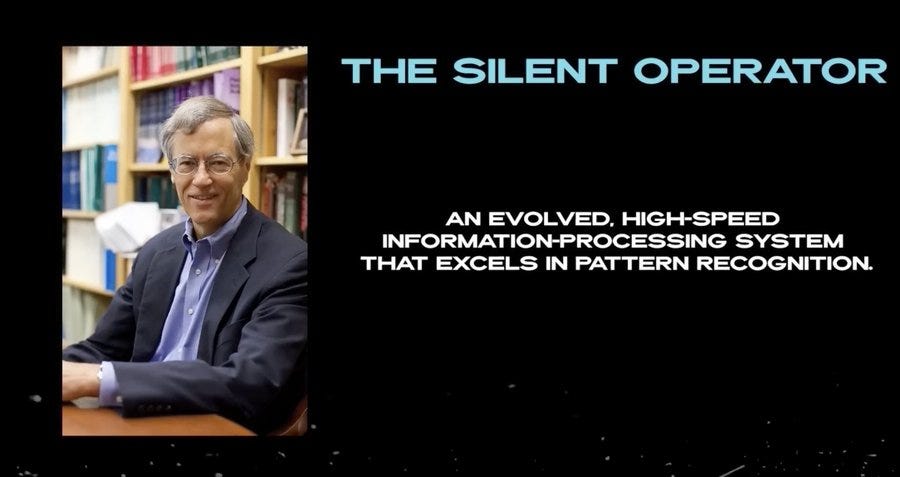
Recruiting this silent operator is the gold standard for flow-based, intuitive decision-making (System One). It’s like having a mental search engine, able to instantly pull up the right solution among millions of options. Instead of making decisions from the newspaper’s headline alone, the silent operator scours and brings to the surface the rest of the newspaper’s information.
VIII. STAGE 3 — THE DMN METHOD TO LAND THE DECISION
DMN stands for Default Mode Network — the part of your brain that stays active in the background, even at rest, quietly working on problems you're not consciously thinking about.
Step 1: Externalize the Problem
At this point, you’ve identified the root problem and have formulated a question. Now you need to write it down.
Speaking aloud doesn’t work as well as writing. Telling a friend can help for other reasons, but it’s a different exercise than what we’re doing here. Casual speaking often engages the brain in a less rigorous way. You’re more likely to skip over details, underestimate complexities, or gloss over potential challenges.
Externalizing the problem through writing is the key, for a few reasons:
1. It moves information to long-term memory.
Neuroscience shows that when you actively generate information (such as through writing) you increase the likelihood that the information will move from your short-term memory to your long-term memory. This fuels the incubation process.
2. It activates your Reticular Activating System (RAS).
Writing also activates what’s known as the “Reticular Activating System” (RAS), a bundle of neurons in your brainstem. The RAS acts like a mental filter, prioritizing information that you need to pay attention to. By writing down your problem, you’re effectively telling your brain to allocate more resources to solving it. This can make your problem-solving process more targeted and efficient.
3. It forces high-fidelity definition.
Writing forces you to define the problem in high fidelity. It moves you past vagueness and sets the stage for a clear, precise range of solutions to emerge. It’s like programming a GPS; writing down the problem gives your brain a specific destination.

Step 2: Surrender Control to the Silent Operator
To let the incubation process take over, stay away from the problem and do other things while your subconscious solves it for you.
Depending on the problem’s magnitude, this could range from hours to weeks.
90 percent of decisions don’t need to be made today. You usually have 48 hours or more.
If the decision needs to be made immediately, go for a quick walk. Or do something stimulating but not taxing. Gardening, cleaning, playing pool. It all works and for two reasons:

First, these activities can sufficiently distract the conscious mind, allowing the subconscious mind to continue processing information.
Second, these lightly stimulating physical activities can induce transient hypofrontality. As mentioned, transient hypofrontality is a temporary downregulation of the prefrontal cortex, which is partially responsible for the increased cognition function, creativity, and decision-making found in flow state.
What doesn’t work: TV, video gaming, or scrolling social media. All these require too much mental processing to do the trick.
Note: If the incubation phase will take multiple days, it’s okay to do whatever activities you want. Your subconscious will still be processing the problem.
Step 3: Extract the Juice from Your Subconscious
At this step, you sit back down and start writing down solutions to the problem you previously defined.
Usually, after a minute or two of writing, the answers to your problems will start pouring through.
This is simple, but the results are often stunning.
This process leverages all of the neurobiological power of the subconscious, extracting the otherwise discarded “exformation” to fuel your decision-making.
As you master this flow-based decision-making process, you’ll begin to find the idea of deliberately sitting down to solve problems laughable. The thought of consciously exerting effort to solve a problem is silly compared to the speed, effectiveness, and enjoyment of System One (intuition).
And over time, your intuitive decision-making speeds up, even without running the process. Some industry veterans can assess a candidate on the spot. Some investors can know whether to invest by seeing a pitch deck. Each has done it thousands of times.

IX. PUTTING IT ALL TOGETHER
You now understand how to use the hardware your biology gives you to turn your brain into a problem-solving supercomputer.
This means you’ll stop getting trapped in endless analysis. No more self-doubt eroding your confidence. You move rapidly from insight to action, making the right call at the right time.
The Flow-Based Decision-Making Process:
Stage 1: Give Your Subconscious a Target
Identify the root problem, not the symptom
Linger with the problem before jumping to solutions
Let your Default Mode Network start processing
Stage 2: Recruit the Silent Operator
Turn the root problem into one clear question your subconscious can work on
Stage 3: The DMN Method
Externalize the problem in writing
Surrender control through light, undemanding activity
Extract the solutions that surface
This process uses the full potential of your mental hardware. You tap into the flood of exformation that most people discard. Through flow-based decision-making, you’ll feel a calm confidence in your choices and conserve cognitive resources for where they matter most. One last thing to bear in mind: Your decision-making is only as good as your rumination.
So, to deepen and accelerate your flow-based decision-making, the key is to maximize the creativity of your default mode network, the part of the brain that is active around the clock, even while we sleep.
I arrived at a very similar realization myself.
A phrase I've come up with is:
"The imperfect balance between the intuitive pursuit of conscious thought and the conscious pursuit of intuition."
To me, it captures the essence of what you've written so beautifully.
The art of living isn't choosing between intention and flow—it's learning to balance both, imperfectly.