

The average knowledge worker does about 2.3 hours of real work per day.
46 hours a month.
I’m going to walk you through a protocol that compresses that entire month into a single day.
Running this protocol will permanently redefine what “productivity” actually means to you.
I - The Math
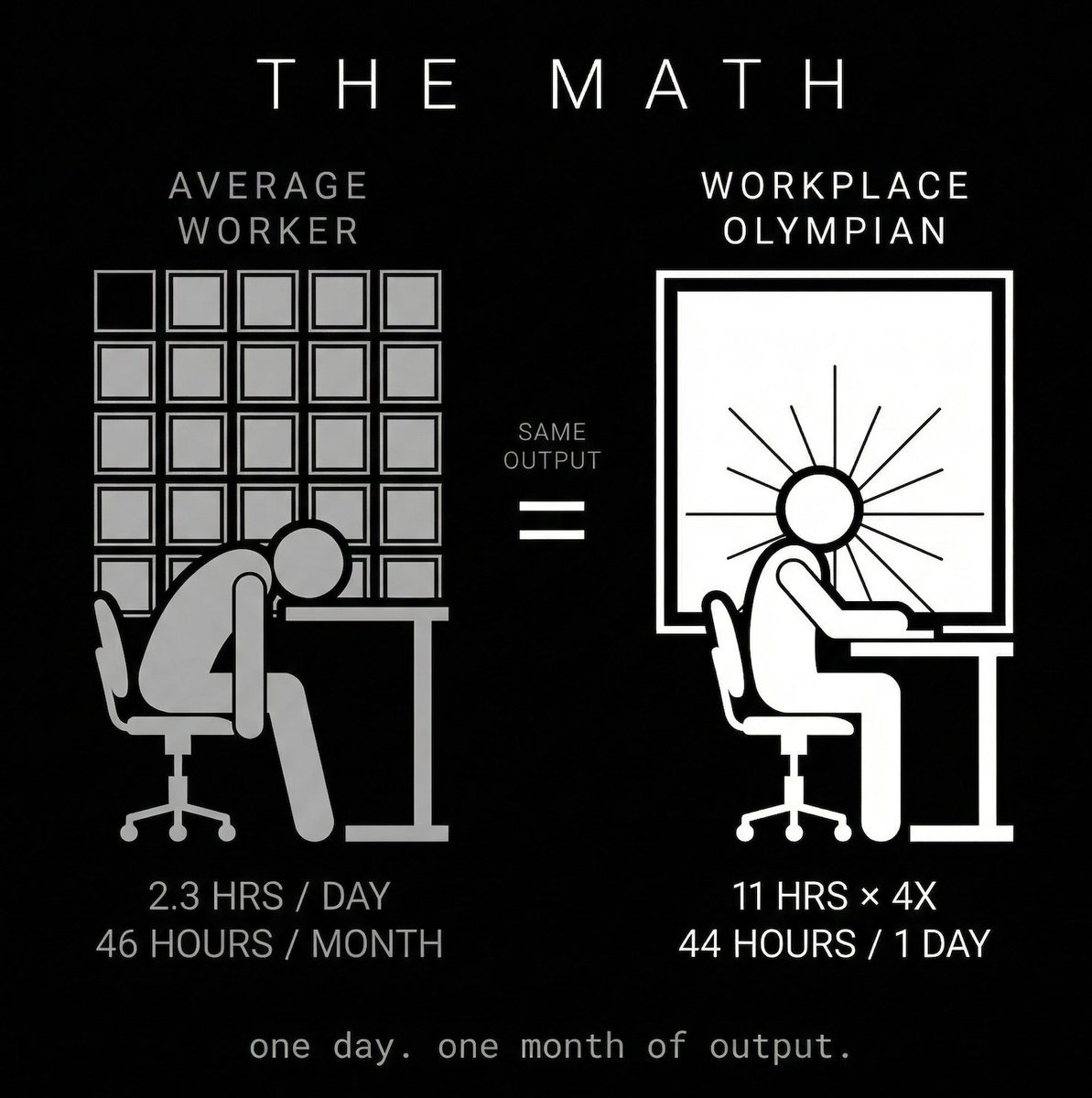
Research suggests that the average knowledge worker performs real work for only 2.3 hours per day, or approximately 46 hours per month.
In contrast, research by McKinsey has shown that executives can increase their productivity by 500% by being in a flow state while they work.
For our calculation, let’s be conservative and assume that if you work in flow, as opposed to the standard diffuse way the average knowledge worker works, you’ll see a 400% increase (4x productivity).
At 4x productivity for 11 hours, you can achieve the equivalent of 44 hours of average work output in a single day.
11 hours × 4x productivity = 44 hours of normal output.
That’s nearly a full month of the average knowledge worker’s real output - compressed into one day.
And there’s a protocol that actually allows you to pull this off.
It’s called the One-Month Day.
II - Why This Works
Psychologist Mihaly Csikszentmihalyi describes flow as “a state in which people are so involved in an activity that nothing else seems to matter.”

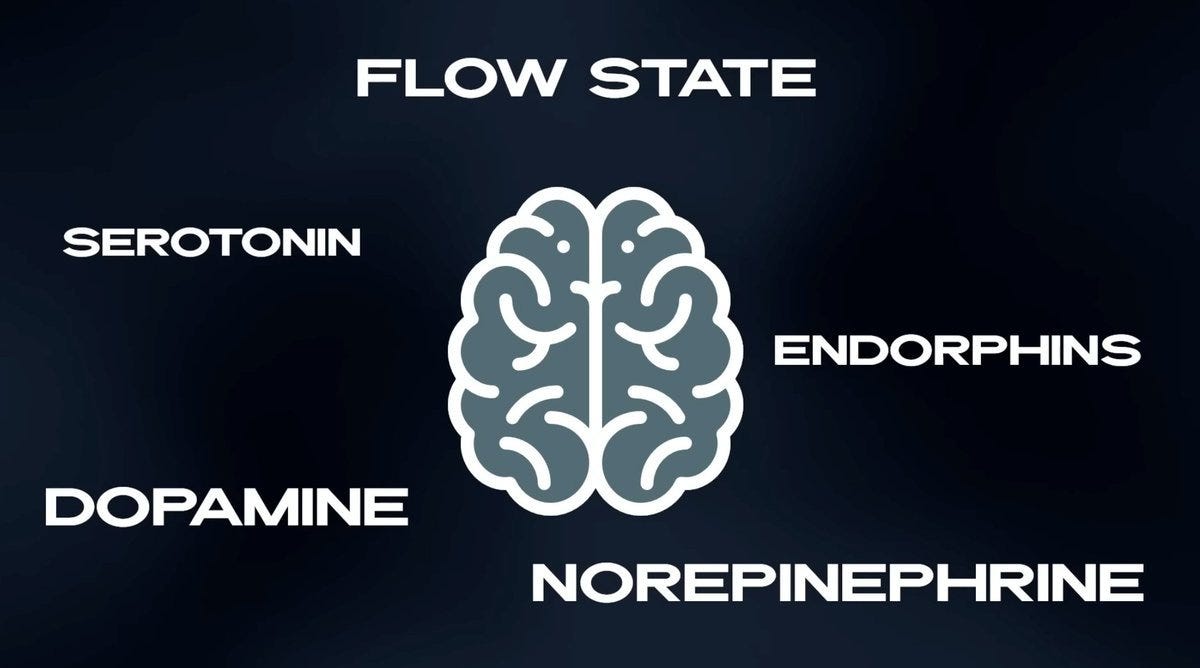
A characteristic of the flow state is a potent mix of neurochemicals - dopamine, norepinephrine, endorphins, anandamide, serotonin - that directly enhance performance.
Dopamine and norepinephrine sharpen focus and boost pattern recognition and motivation.
Endorphins and anandamide increase endurance and enhance creative thinking.
Serotonin elevates mood and helps you stick with challenging tasks.
In flow, there’s a phenomenon known as transient hypofrontality. This temporarily quiets your prefrontal cortex - the center of self-doubt and overthinking.
When your inner critic falls silent, your attention and effort flow without hesitation.
The average knowledge worker spends hours second-guessing themselves, backtracking, and stumbling through their work with uncertainty.
When you erase all that chatter, your productivity surges.
Considering these neurological shifts, 500% productivity increases sound less and less hyperbolic.
You’ve probably experienced this state where you’re completely immersed and absorbed in what you’re doing.
You know that you are dramatically more productive when deeply immersed in flow, completely in the zone.
III - How To Pull It Off: The Four Pillars of Flow
In order to make the One-Month Day a reality, it requires maximizing the four pillars of flow:
Remove all the Flow Blockers - things that make flow impossible
Increase your Flow Proneness - your tendency and ability to get into flow
Make expert use of Flow Triggers - preconditions that cause flow to emerge
Enter and exit the Flow Cycle multiple times to sustain the neurochemistry of flow for the entire day
We’ll cover these along the way as we break down how to set up, schedule, and run the One-Month Day.
Step 1: Isolate the Target
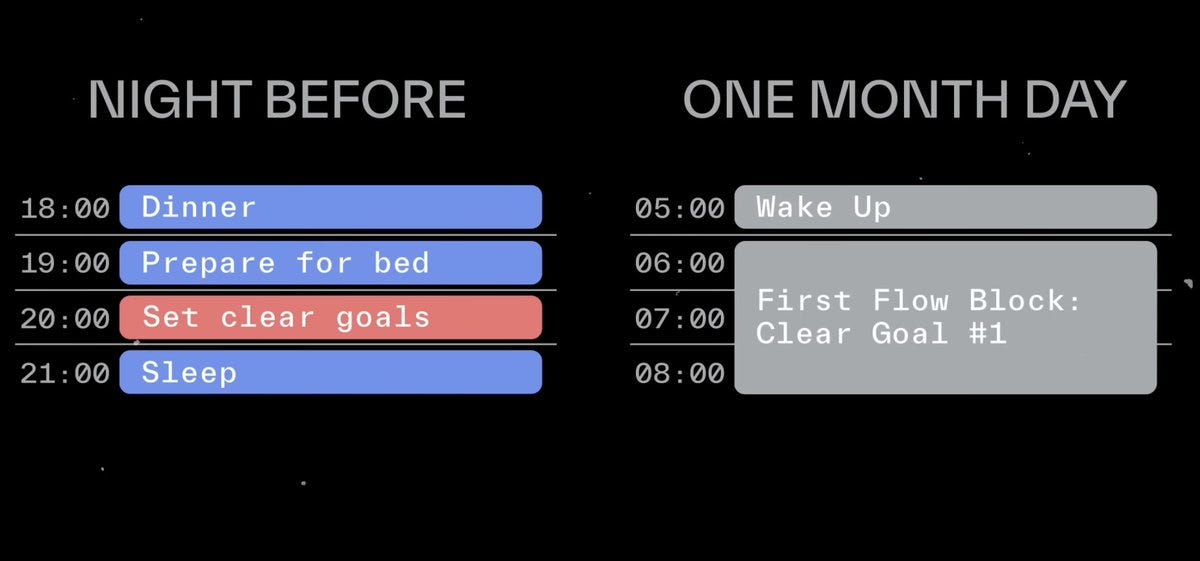
The first part of the One-Month Day happens before the day even starts.
Take a moment to consider everything that’s on your plate. Consider your current goals and your current plan for the next 30 days.
If you could snap your fingers and have something done in a day that would normally take a month... what would it be?
Examples:
Rebuild a complex system in your business
Complete several chapters of a book
Develop a new skill (flow increases learning rates by up to 490%)
Write and launch an entire product
Clear a backlog that’s been haunting you for months
Whatever it is, bring something to mind to accomplish during your One-Month Day.
It should be something singular and highly consequential, not just clearing a whole backlog of admin tasks. Those don’t benefit from the altered state of consciousness you’ll access thanks to flow during a One-Month Day.
If you’re not sure what to focus on, ask:
What action, if completed, would progress my primary professional pursuit the most?
What action would eliminate or make countless other tasks easier?
What task will allow me to do more with less or reduce future demands on my time, energy, and attention?
Now, convert that outcome into clear goals.
In Csikszentmihalyi’s research on flow state, he identified several preconditions that cause it to emerge: flow triggers.
But there’s one precondition that isn’t just a trigger, it’s a prerequisite.
Without this, there’s no flow.
That trigger is clear goals.
A clear goal is an action to take, a target for your attention on the task level.
Clear goals aren’t about the finish line; they’re about the next step.
Think of them less like winning the championship and more like scoring a single point.
Selling a million books is the dream. Writing 500 words is today’s clear goal.
Why clear goals work neurologically:
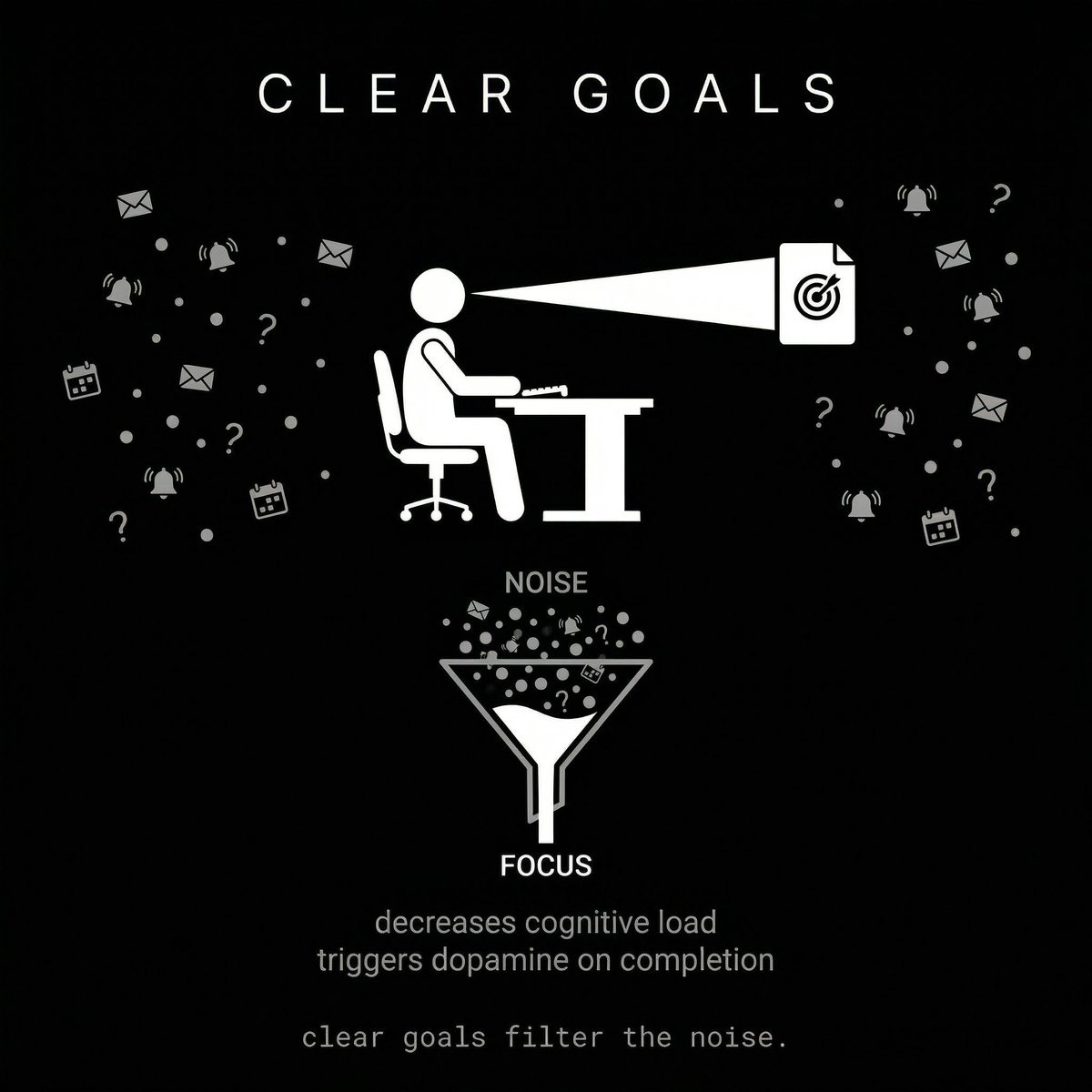
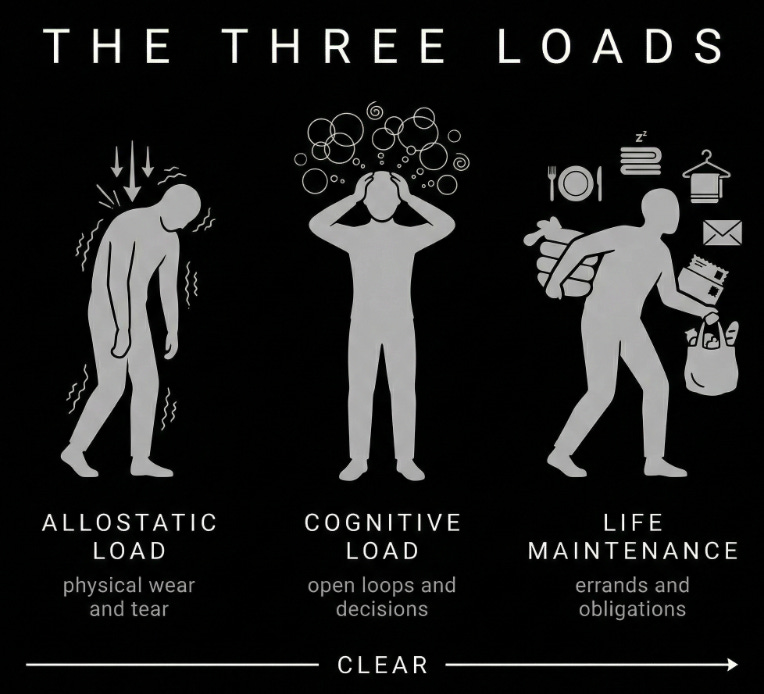
Clear goals decrease cognitive load - the number of items held in working memory - so your brain isn’t bogged down deciding what to do next. This leaves more mental resources for actually doing the work.
When a clear goal is set, the brain knows how to efficiently allocate its resources. The prefrontal cortex filters out irrelevant information, allowing for deeper immersion in the task.
Then, as clear goals are hit, dopamine floods your system. This reward chemical makes the work feel good and keeps you motivated, sustaining your attention.
For the One-Month Day, you need your clear goals decided before the day starts.
Step 2: Clear the Load
In order to pull off the One-Month Day, your flow proneness has to be high.
Flow proneness refers to your likelihood of dropping into flow at any given time. It affects the ease, depth, and duration of your flow states.
Rather than leave this up to chance, we can intentionally clear everything that suppresses flow proneness in advance.
Here are the three non-negotiables:
Clear Your Allostatic Load
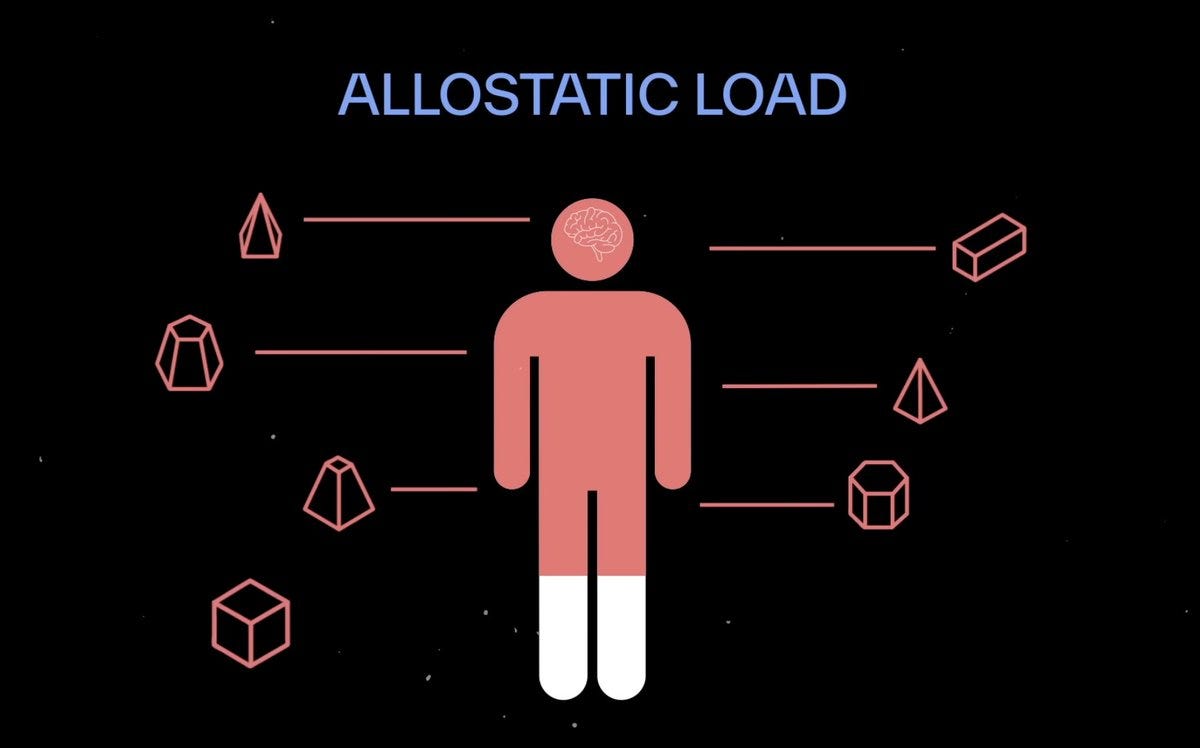
For the One-Month Day, your body and brain must be fully recovered.
Flow requires neurochemicals that are expensive for the brain to produce. It’s not possible to sustain the state for long without proper recovery.
The way to recover is to clear your allostatic load - the physical wear and tear your body and brain accumulate throughout the day.
To clear your allostatic load, use active recovery protocols the day before your One-Month Day.
This is critical.
If you’re not fully physiologically recovered, it’s going to be nearly impossible to sustain the level of attention required to maintain flow as long as we need to to achieve a one-month day.
Now, crucially, active recovery is distinct from relaxation. Relaxation feels subjectively relaxing. Active recovery is objectively recovering for the nervous system.
It might be relaxing to watch TV while munching on Cheetos, but it will fatigue your system more.
It might be the least relaxing thing imaginable to be submerged in an ice-cold bath, but it will leave your nervous system more recovered.
The day before your one-month day, you want to spend at least 90 minutes in active recovery, ideally at the end of that day, so the recovery carries over into your one-month day.
I would suggest picking one of the following three.
They’re all particularly heavy hitters and good for before one month day (bonus points for doing two of them):
Temperature therapy (Sauna/cold exposure/hot bath)
Deep tissue massage
Sensory deprivation chamber (float tank)
In addition, it’s critical that you get a high-quality night’s sleep before your one-month day.
To increase the likelihood of this, leave an extra-long window of around five hours between eating and sleeping.
Ensure that you have a nine-hour block in bed attempting to sleep so that you can actually sleep for over eight hours.
You can also track how recovered you are with Heart Rate Variability (HRV) - a key indicator of fitness, stress resilience, and readiness for peak performance.
Aim to get your HRV at or above your usual range to heighten your flow proneness for the One-Month Day.
If there are any acute stressors in your life, you might want to save the One-Month Day for another day.
Clear Your Cognitive Load
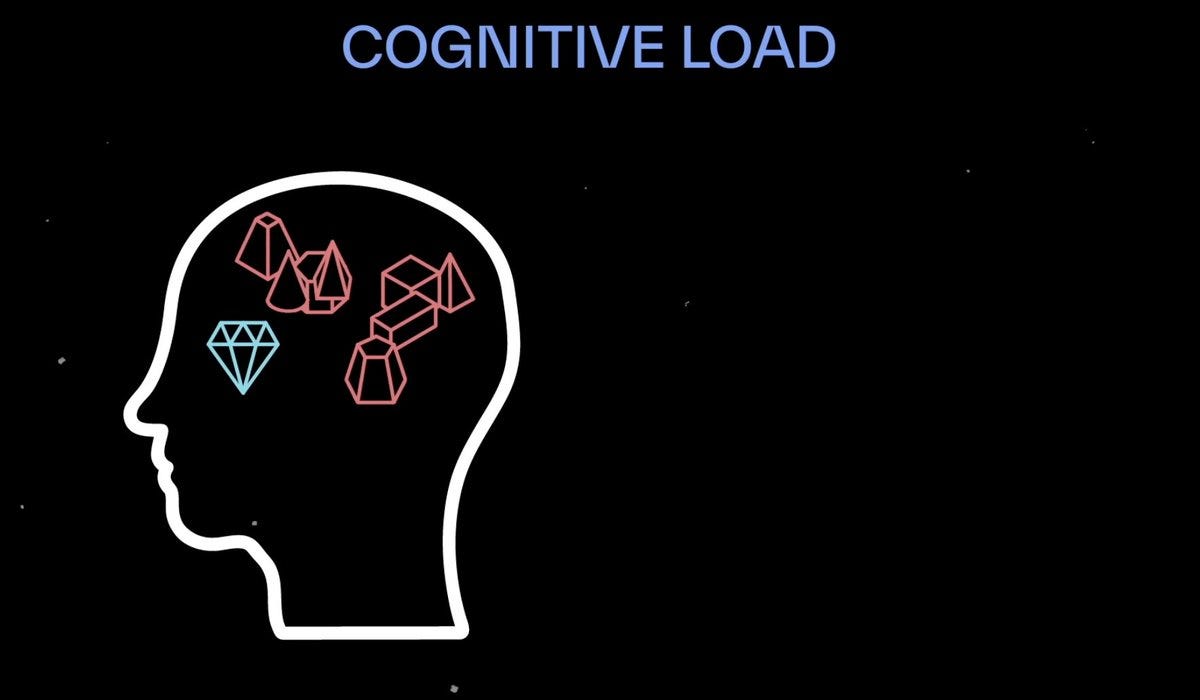
Cognitive load refers to the number of items you’re carrying in working memory. Research has shown that flow triggers work by decreasing cognitive load.
This is because the lower our cognitive load, the more attention we have to allocate to a given task, which increases focus and primes us for flow, which is a state that transcends mere focus.
Start by erasing all possible decisions from your one-month day.
Don’t wake up wondering where you’re going to work, what you’ll wear, or what you’ll eat.
In fact, don’t wake up wondering about a single thing for the entire duration of the one-month day.
Every decision, down to the microscopic, needs to be pre-determined.
Prep your clothes, commute, and food the night before. Save all your cognitive resources for time spent in flow.
Treat this process as if you’re preparing for a 3:00 AM flight, where every detail is planned the night before. Your bags are packed, you’re checked in, your boarding pass is ready.
That’s the level of preparation needed.
And if this sounds extreme, remember we’re trying to do a month of work in a single day. Extreme output needs extreme input.
Next, wrap up all loose ends.
Go through all your texts, respond to everything as needed, ping whoever you need to ping, and wrap up any final dangling tasks.
The rule here:
Zero open loops lingering through your One-Month Day.

Finally, set your workspace up to be a flow dojo.
A chaotic physical environment ends up being mirrored by the mind, creating mental chaos. Organize your workspace as carefully as you would arrange the tree, lights, and gifts for kids on Christmas morning.
Instead of having to pull out your laptop, untangle the cable, and search for an outlet, set your office up so you can press a key and start working with zero friction.
Clear Your Life Maintenance Load
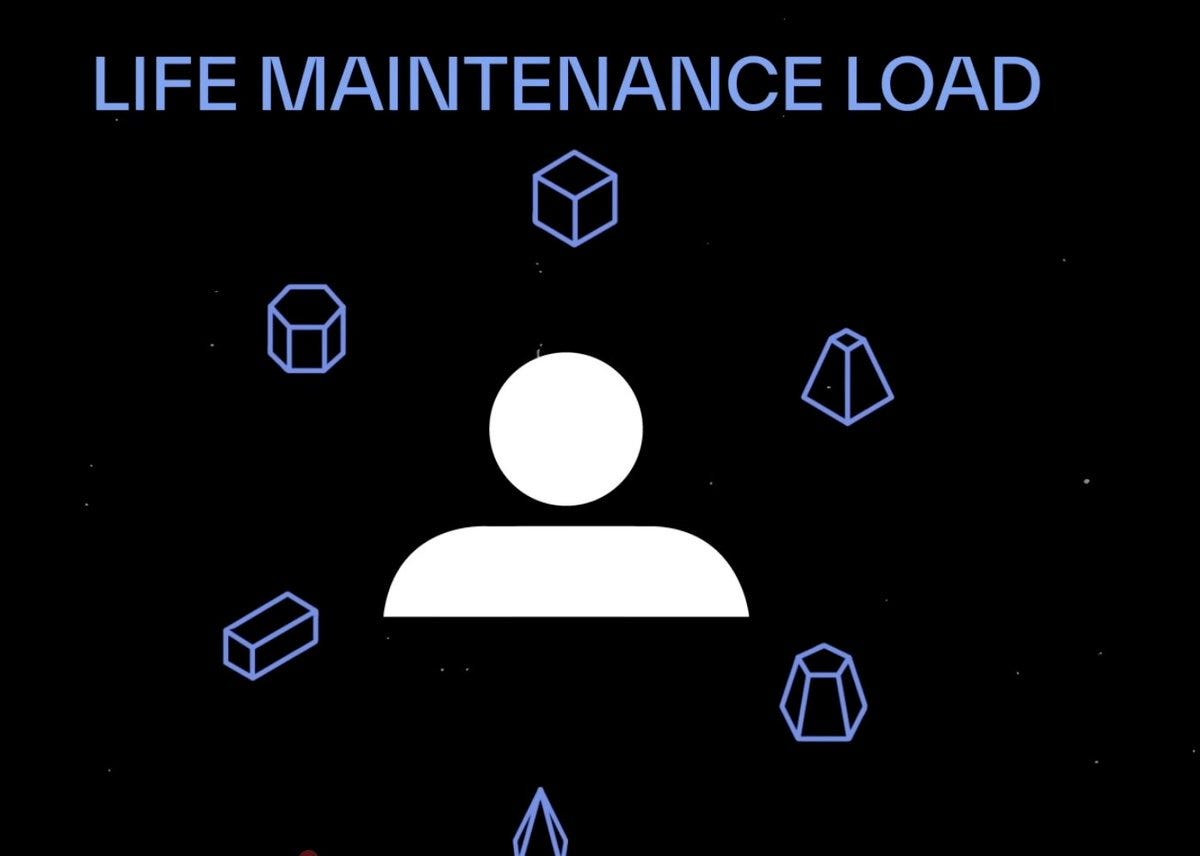
Life Maintenance Load is all the necessary but non-work tasks that keep your personal world running - cooking, cleaning, errands.
The stuff that has to be done, but in no way moves you towards your goals.
For the One-Month Day, you must bring your Life Maintenance Load as low as possible - or find a way to safely “pause” it for the full day.
This means you want your meal prepped in advance or to have a delivery scheduled.
You want laundry, minor errands, or anything administrative to be done in advance or delayed till after your one-month day.
You want to avoid any little tasks, like having to take out the trash or clean the dishes, from creeping in at least for this day.
Working outside your home for the full duration of your one-month day can be one way to guarantee this.
Step 3: Build an Impenetrable Flow Fortress
Tell me if you can relate to this:
You’re deep in a crucial task. The momentum is building. You’re on a roll.
Then your phone pings.
“It’s just a glance,” you think. But that glance spirals into seconds, minutes, then hours.
This is distraction at work, and it’s the most immediate flow blocker.
Before you kick off the One-Month Day, you must make distraction impossible.
The goal is not to exert discipline through your one-month day to resist distraction. The goal is to make distraction an impossibility.
If working at an office, leave your phone at home.
If working at home, turn it off and store it in the shed. Lock it up or give it to your spouse. Whatever it takes.
The solution is simple: Get rid of your phone for the day.
Simply putting on flight mode doesn’t do the trick. Suppressing the urge to check your phone depletes cognitive resources, as suppression of temptation is an active process.
There’s also the real risk that a single check could blow open your one-month day, causing you to lose the whole thing.
Go Dark
No email, texts, calls, or instant messaging. Turn off all notifications.
Inform people beforehand that you won’t be available for the entire day. They know where to find you in an emergency.
Block the Trivial Tech
Block everything on your computer except what you’re working on.
Use tools like Self Control or Freedom to make accessing distractions impossible for the whole day.
Set these blockers up the night before so that distracting yourself within your one-month day is impossible.
Set Up a Disruption-Free Environment
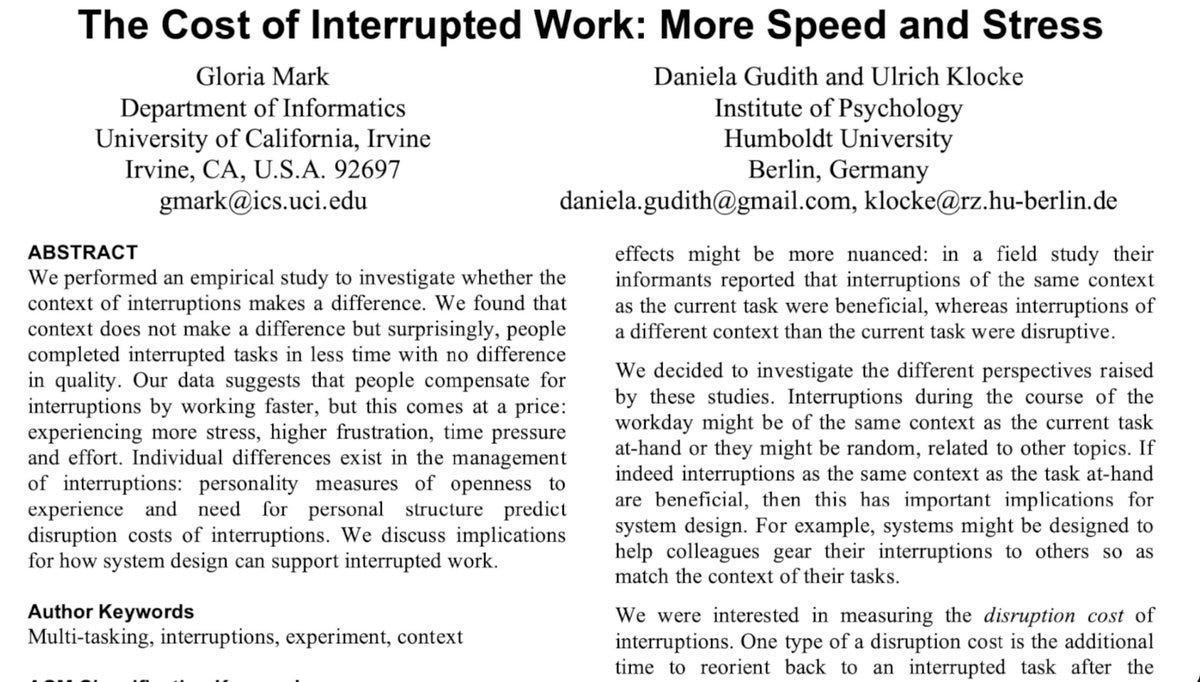
Research by Gloria Mark highlights the hidden cost of disrupted work - even a small task-switch increases stress, drains cognitive resources, and extends the time it takes to finish a task.
Even after the disruption ends, your brain needs roughly 21 minutes to regain full concentration.
This is why trying to do a One-Month Day in an office with swarming colleagues or at home with kids running around won’t work.
If needed, check into a hotel or co-working space for the day.
Make Self-Distraction Impossible
During the One-Month Day, count on this happening:
You’re deep in flow, words flying, code compiling, creativity crackling... then WHAM!
An idea unrelated to your task pops in. An errand you forgot intrudes with urgency. You think of something you need to tell a colleague.
If you give in to these distracting thoughts, your focus will fracture like a dropped mirror.
The solution: keep a notepad specifically dedicated to externalizing your thoughts.
Get it out of your head to lower cognitive load and get back into flow.
Then, take a few deep breaths through the nose. And if needed, go for a quick walk.
This releases neurotransmitters like acetylcholine, which promotes calm and focus. It can also lead to transient hypofrontality, which can coax you back into flow.
Step 4: Wake Up and Flow
Okay, let’s get down to the specifics of how to run the day hour over hour now that you’re prepped.
Instead of an elaborate routine, wake up and dive into your highest-priority task.
Not in an hour. Within ninety seconds of opening your eyes.
Why?
Because alpha and theta, the neuroelectrical signature (brain waves) of flow are not far from theta or delta, the brain waves of sleep.
The struggle phase of flow is the movement from beta to the borderline between alpha and theta.
Waking and working immediately is a way to shortcut it.
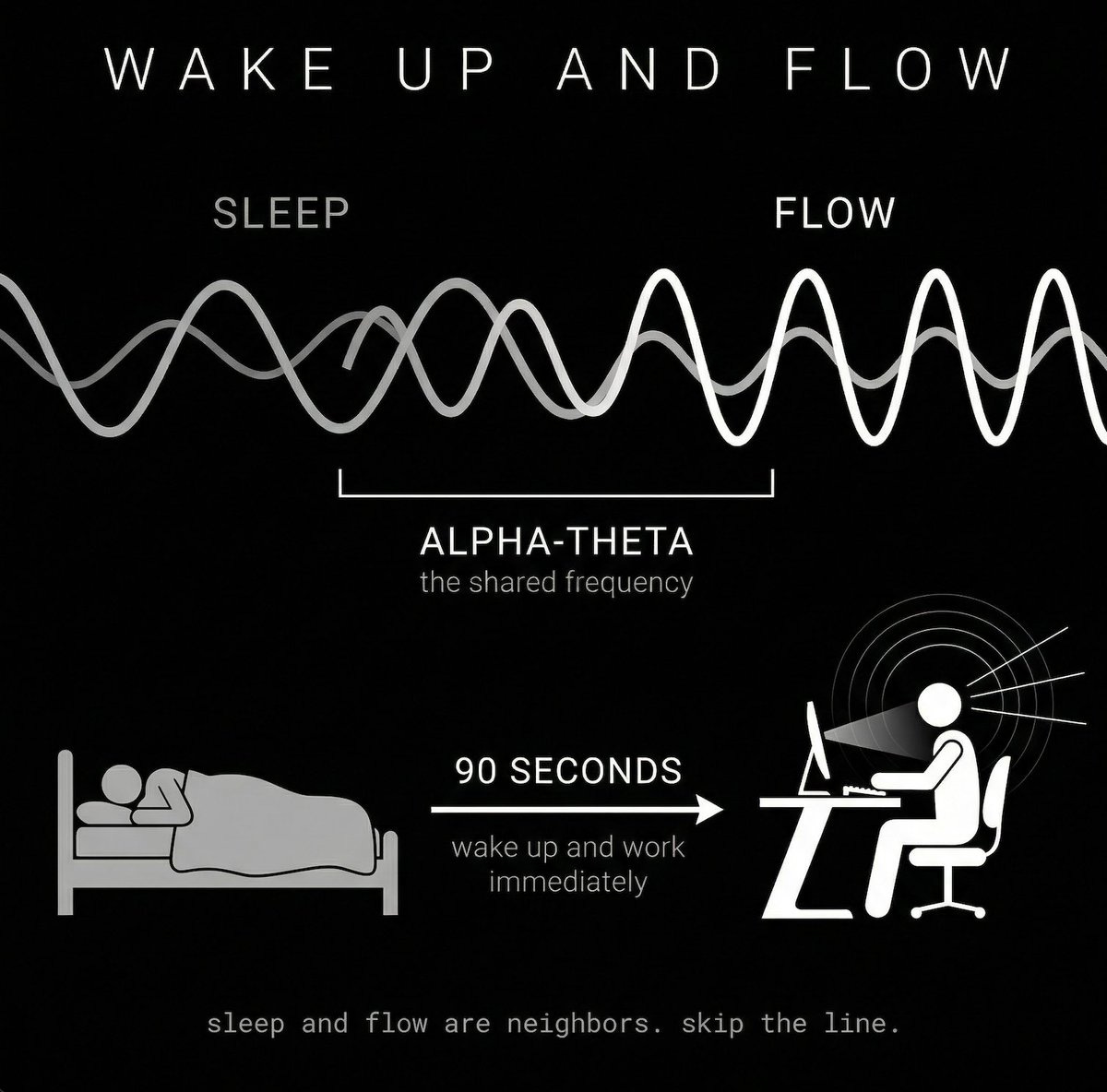
Even if you’re half asleep and groggy, drop right into your most important task. Within 15 minutes, you’ll be in flow.
This dream-to-waking state is when your flow proneness, your tendency to get into flow, is naturally at its peak.
It might be a struggle at first (stage 1 of the flow cycle), but once you get through the initial rough patch, you’ll release into flow.
Step 5: Run The One-Month Day Schedule
Now that you have the building blocks, let’s dive into the actual hour-by-hour schedule.
When you run the One-Month Day, you are “flow stacking” - stacking flow blocks together.
A flow block is a discrete chunk of time, usually 1-3 hours, in which you allocate all of your attention to the task at hand, such that you tap into flow and milk that flow state for all its worth.
Below is my suggested schedule for your One-Month Day.
You can adapt it a little to fit your needs, but be sure to keep the same total amount of hours in flow and the emphasis on recovery intact:
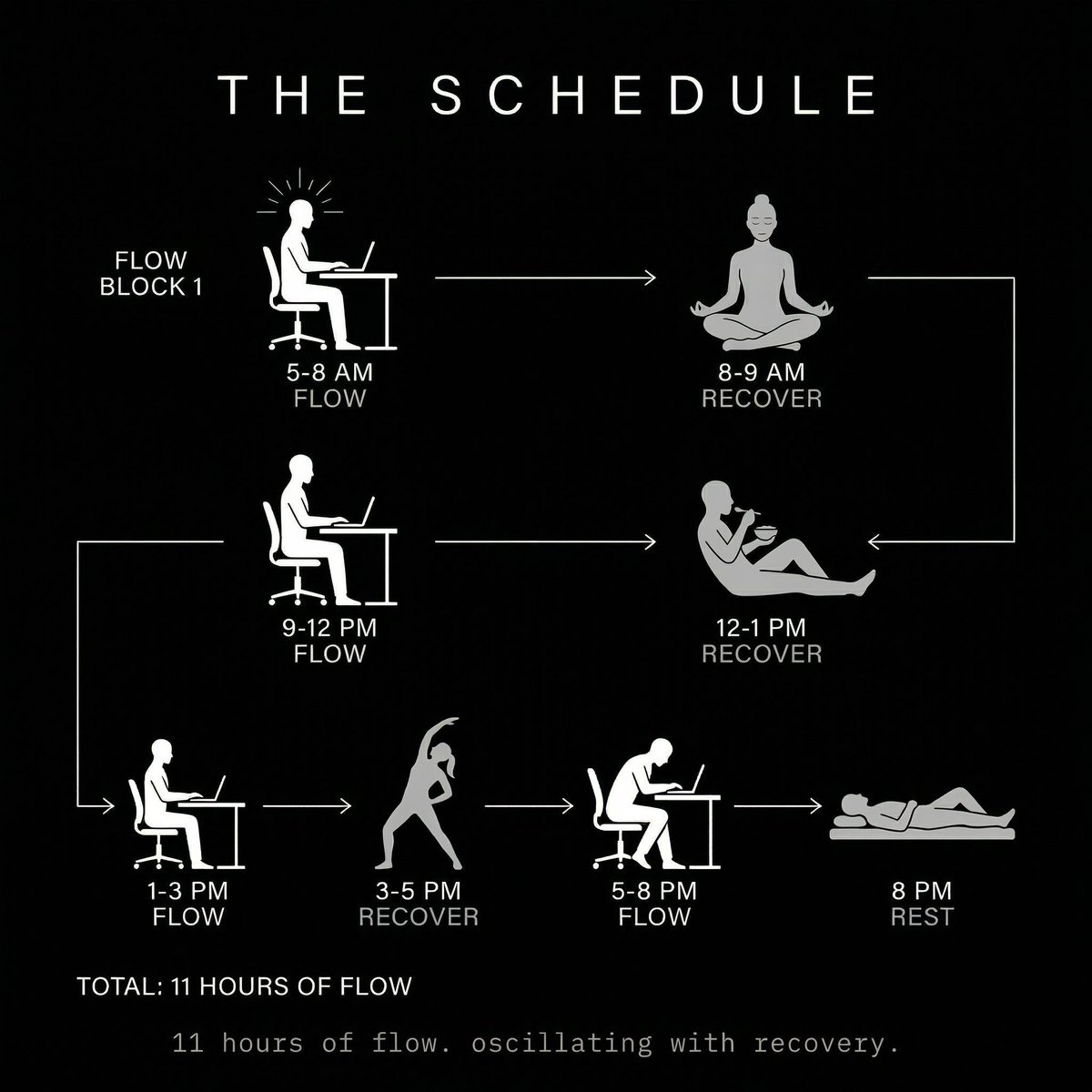
Note: If you’re not an early riser, adjust the start time. The key is to start when you’re most flow-prone.
IV - Common Reactions
Now you may be wondering: “Isn’t this a recipe for overworking and burnout?”
In reality, working too hard isn’t a common problem...
Under-recovering is.
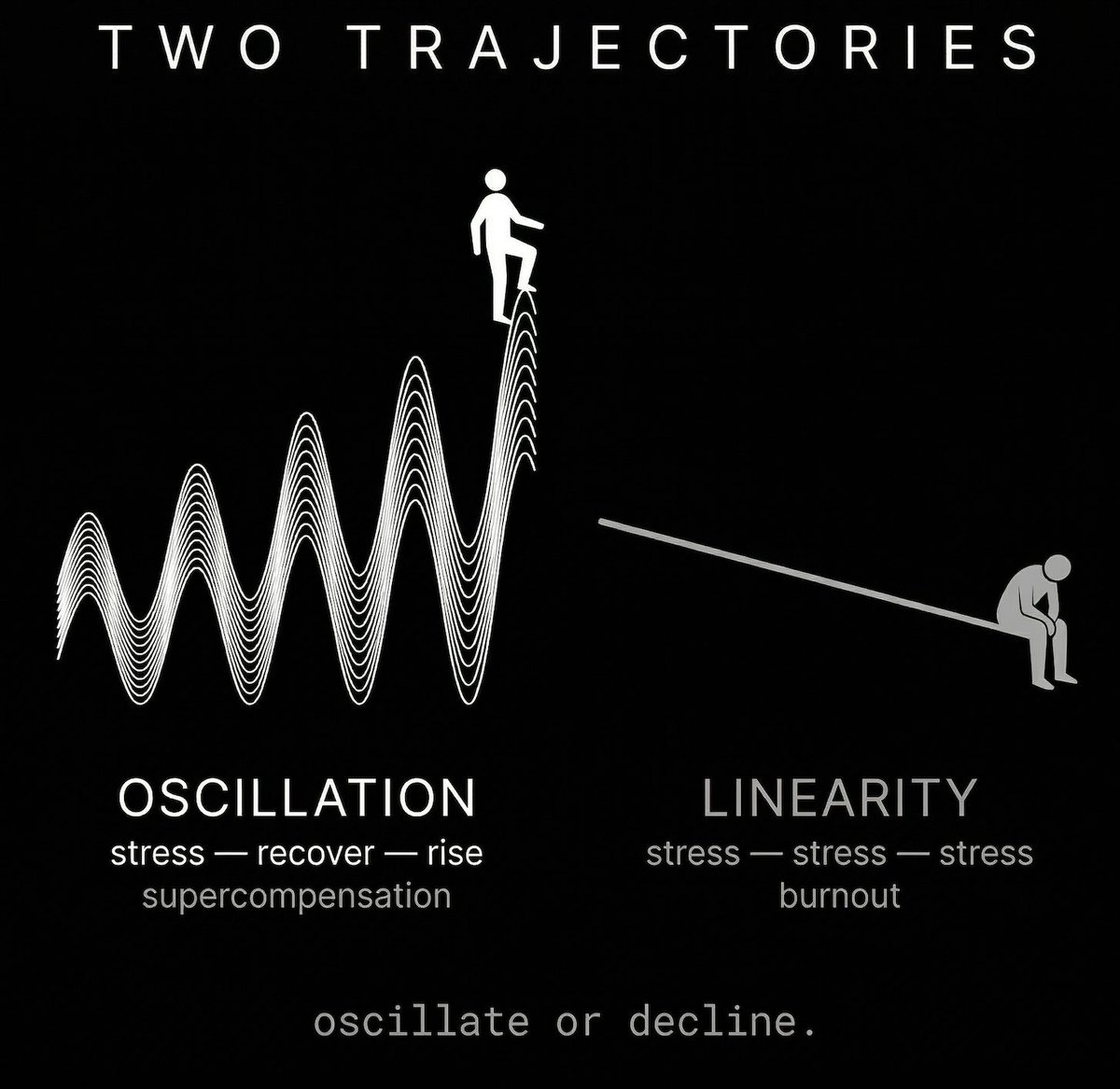
Part of how we get the right amount of recovery - which replenishes our energy - is by entering and exiting the flow cycle multiple times in a single day.
Or maybe you’re thinking: “I’m surprised by how many hours of recovery there are.”
Surely you gotta get up at five and work until midnight to pull this off, right?
Quite the opposite.
Most people, if they try to do this amount of work linearly, just plowing through the hours, will hit a wall by hour 5 and be sapped.
Output will collapse, and their day will fall apart.
Instead, what we’re trying to multiply is our per-hour output.
To do so, we have to enter and exit the flow cycle over and over, with rapidity: struggle, release, flow, recovery.
The beauty of the One-Month Day is that you are oscillating, like an Olympian, from extreme exertion to extreme recovery.
V - The Play-by-Play
Here’s what a One-Month Day actually looks like:
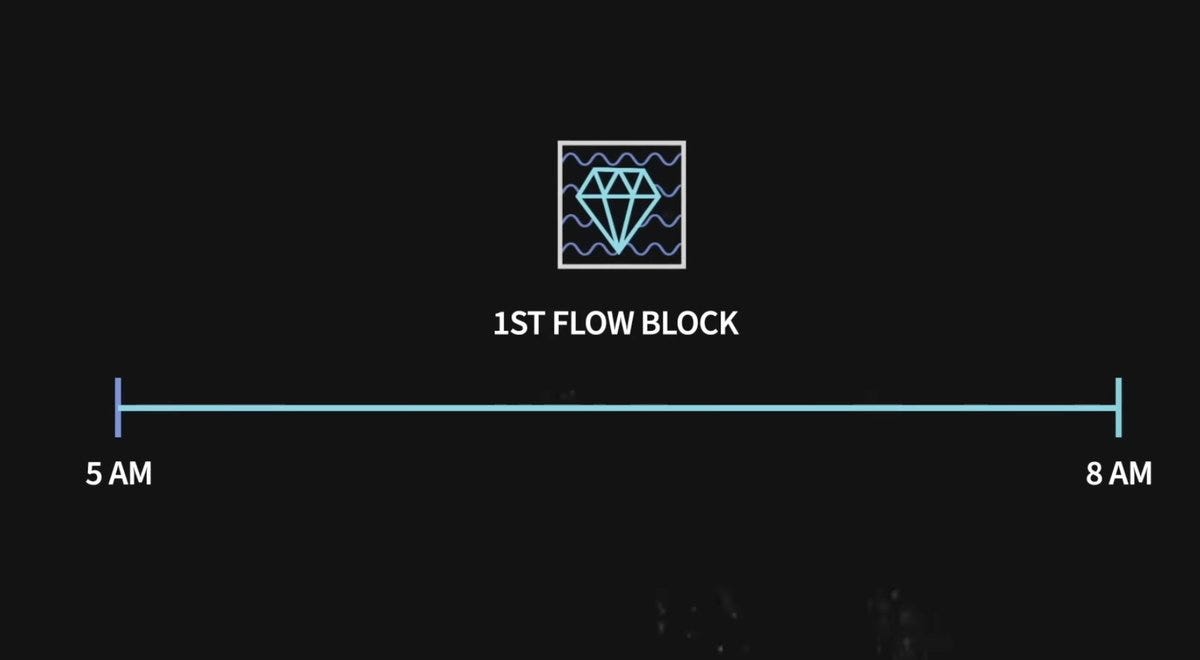
5:00 AM - 8:00 AM: Flow Block #1
Your eyes open. Because you prioritized sleep, you feel alert instead of groggy...
For the first flow block, wake up and flow. This is your body’s prime time.
Pull up the task you carefully targeted the night before and dive in. Push past any initial struggle and let the momentum build.
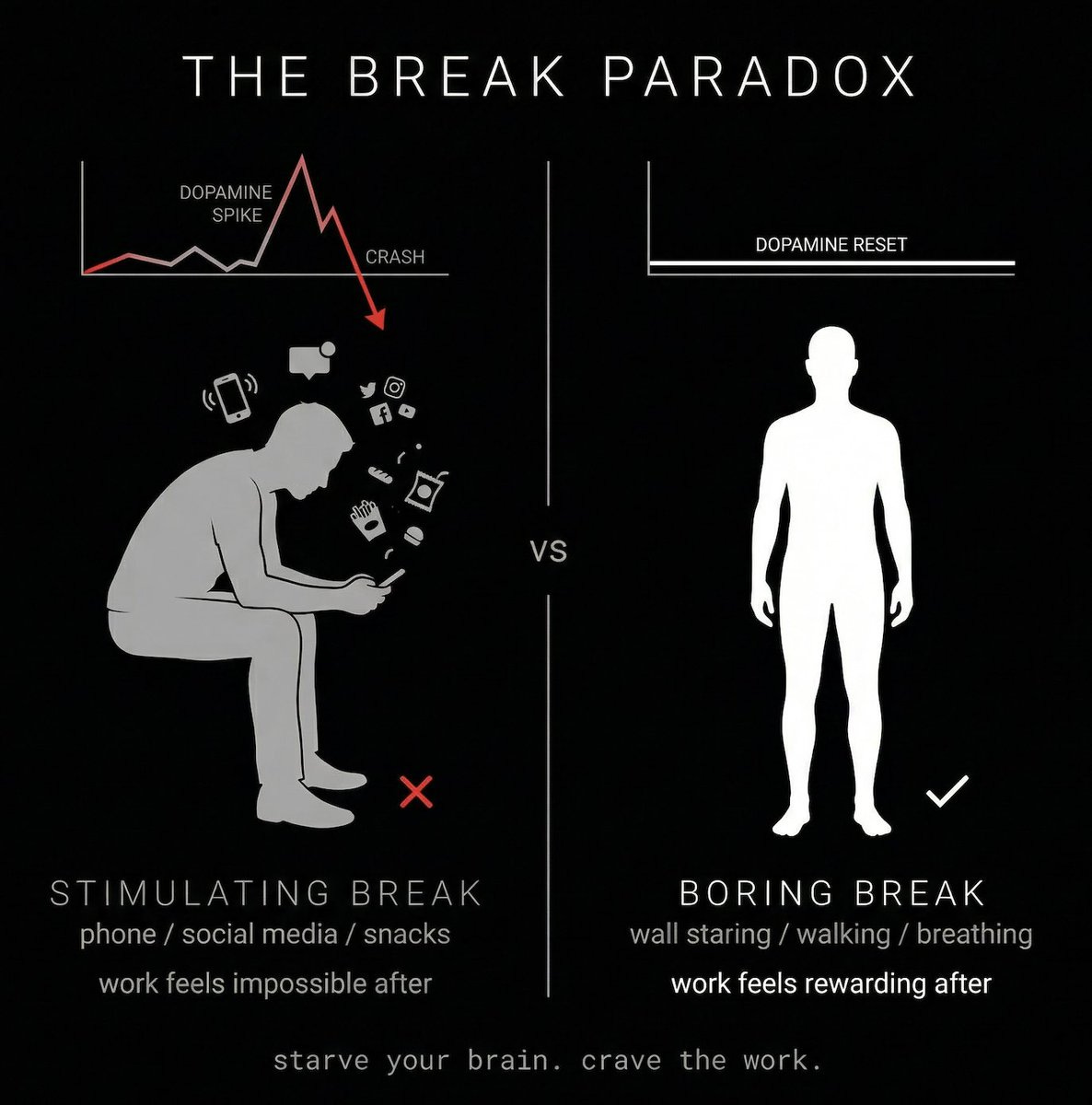
Most people can flow for an hour before needing a quick, boring break.
Focused attention draws on cognitive control resources, which deplete over time.
A brief, non-stimulating break allows these resources to replenish without exciting the dopaminergic system and causing your work to feel under-stimulating.
Keep these breaks short and non-stimulating. Don’t do anything that will suck you in and prevent you from getting back into flow.
Just sit and stare at a blank wall for a few minutes, and you’ll be surprised how quickly you regain energy and are itching to get back to work.
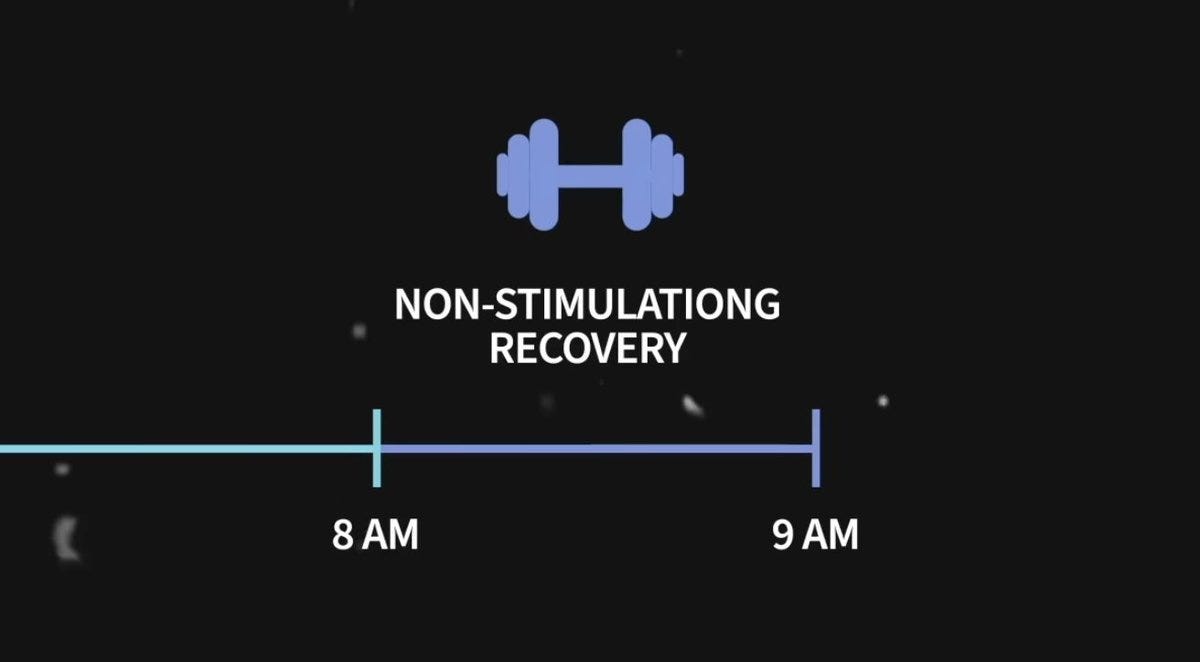
8:00 AM - 9:00 AM: Flow Priming Protocol
The buzzer sounds. You banked 3 hours of ultra-efficient flow.
You’ve moved through the flow cycle - struggle, release, and flow.
Now it’s time to recover (the last part of the flow cycle).
Here, you want to do a flow priming protocol to reboot your flow proneness for the rest of the day.
This is part recovery. Part intentionally flooding your system with neurochemistry that will elongate your ability to sustain flow.
I generally recommend the following four variables as they pack the biggest punch:
1. High-Intensity Movement (16-20 minutes)
Intense exercise floods your system with endorphins and anandamide - the body’s endogenous cannabinoid - both key flow-state priming neurochemicals.
Do this wherever you’re working - no gym, no commute, no friction. Eight rounds of 40 seconds burpees with 20 seconds rest, then four rounds alternating jump squats and mountain climbers. The goal is breathlessness. If you can talk, you’re not going hard enough.
2. Stretching and Myofascial Release (5-7 minutes)
Flow benefits from heightened interoception - the ability to sense your internal bodily states. Stretching and foam rolling activate mechanoreceptors throughout your fascia, heightening body awareness and calming your nervous system’s threat-detection circuitry.
Spend 60-90 seconds each on hip flexors, thoracic spine, hamstrings, and chest. Move slowly and breathe into areas of tightness. The goal is presence, not performance.
3. Controlled Breathwork (10-12 minutes)
Wim Hof-style breathing temporarily releases additional endorphins and adrenaline. It also trains your capacity to remain calm under physiological stress - a core flow prerequisite.
Do four rounds: take 10-20 deep breaths through your mouth, allowing air to collapse out rapidly on the exhale, then on the final exhale release all air and hold as long as comfortable. When you need to breathe, inhale fully and hold for 15 seconds before beginning the next round.
4. Cold Exposure with Gratitude Practice (2-3 minutes)
Cold water triggers a norepinephrine spike of 200-300% above baseline that persists for hours. Norepinephrine is the neurochemical of alert focus, and elevated levels make flow entry easier.
At the end of your shower, turn the water fully cold and breathe slowly.
While you’re in, run through three things: something you’re grateful for, the biggest benefit of completing the rest of your One-month day, and how you’ll feel when it’s done. The mental priming is helpful.
Ideally, remain in a fasted state while doing all of this, and through the rest of your next flow block. Food can often be a major flow deterrent.
If needed, have 100mg of caffeine and 200mg of L-Theanine for a significant cognitive boost.
This primes you for the next flow block.
9:00 AM - 12:00 PM: Flow Block #2
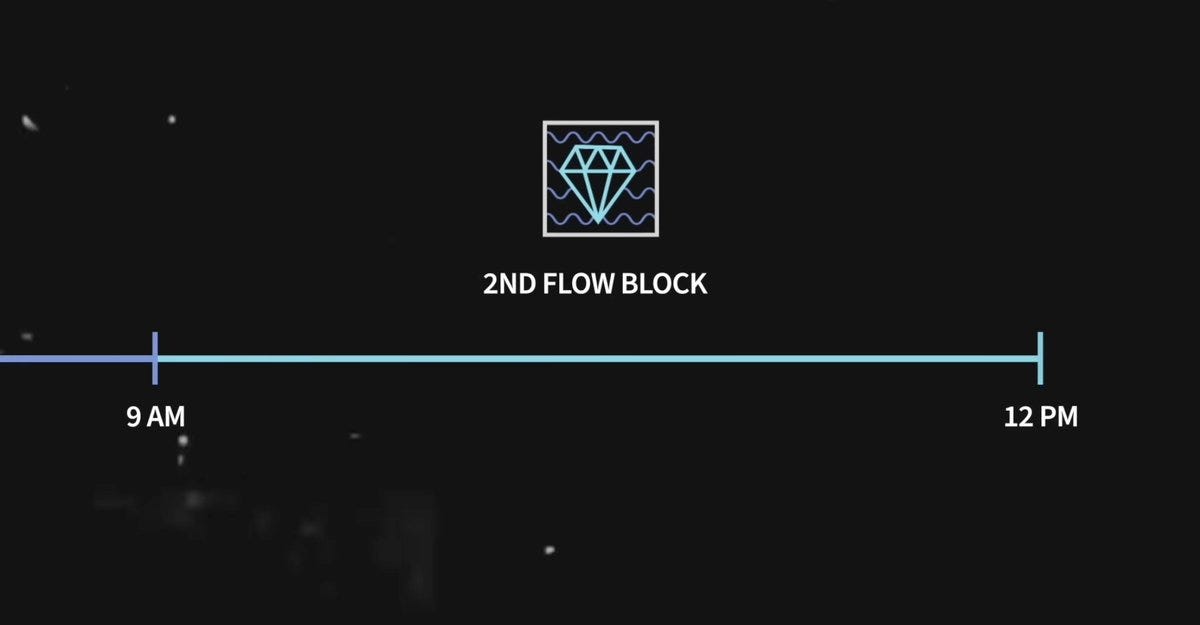
Time to jump into another three hours of flow.
As long as you don’t get distracted, you should be raring to go. It’s time to restart the flow cycle.
Roll up your sleeves, take a breath, push past the struggle phase, and watch your pace of progression uptick as you continue upping your pace.
12:00 PM - 1:00 PM: Non-Stimulating Recovery
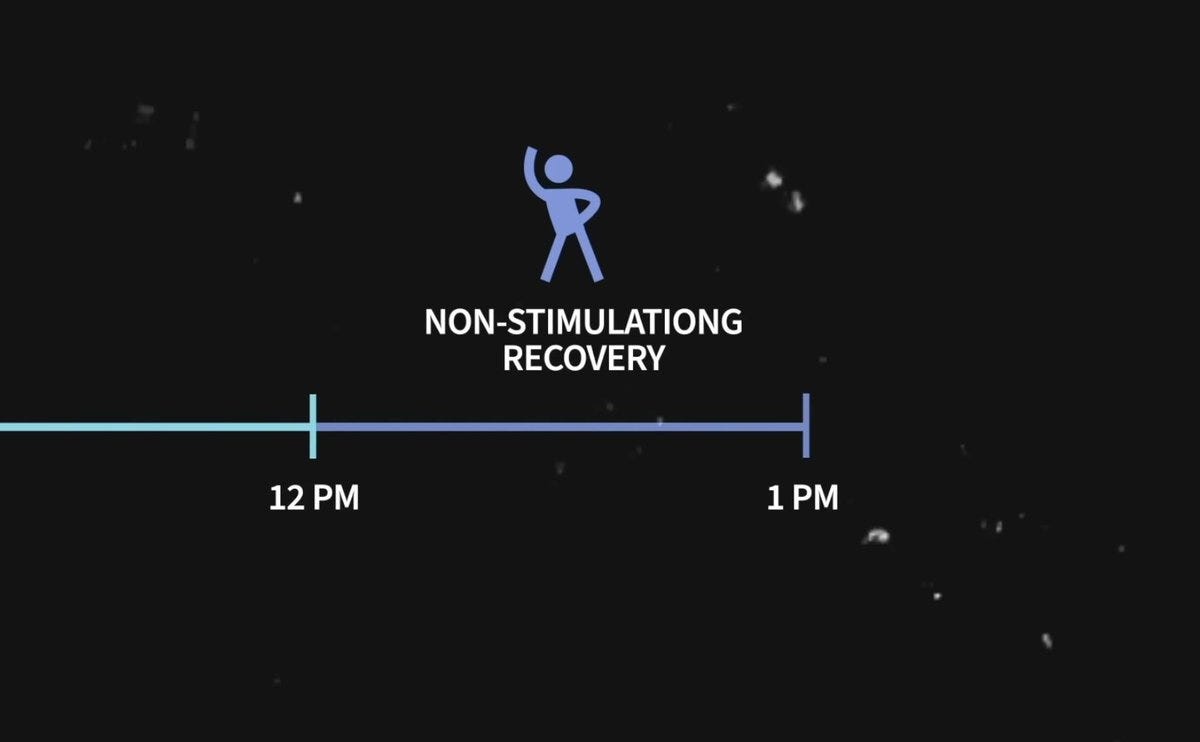
You’ve once again moved through the first three phases of the flow cycle and gotten to the other side.
Take a nap, a quick walk, eat a fuel meal, food that will not inhibit flow state, and do some stretching.
At this point, you’ve already enjoyed six hours of focused work time spent in flow.
You’re already two weeks ahead of the average knowledge worker.
1:00 PM - 3:00 PM: Flow Block #3
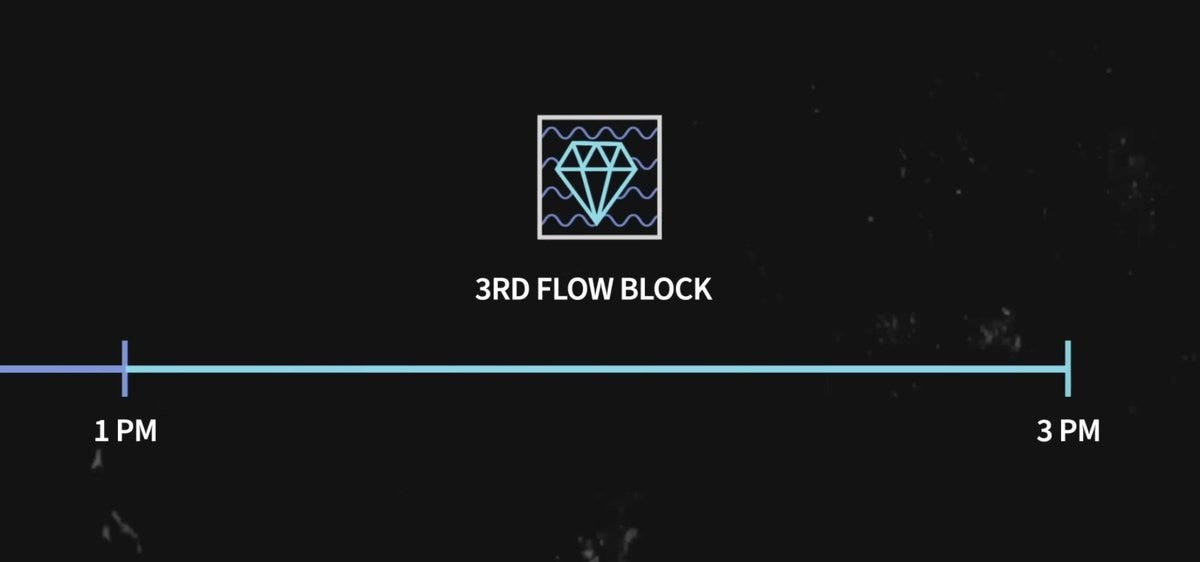
Time to dive back into flow.
This is often the make-or-break moment of the day at this point.
Fatigue is common, and there can be an energy trough after your morning momentum - discipline feeling depleted...
If you lean in really hard and land this block, you are almost certain to have momentum carry you over to the finish line. Dig deep. This is a deciding moment.
3:00 PM - 5:00 PM: Active Recovery
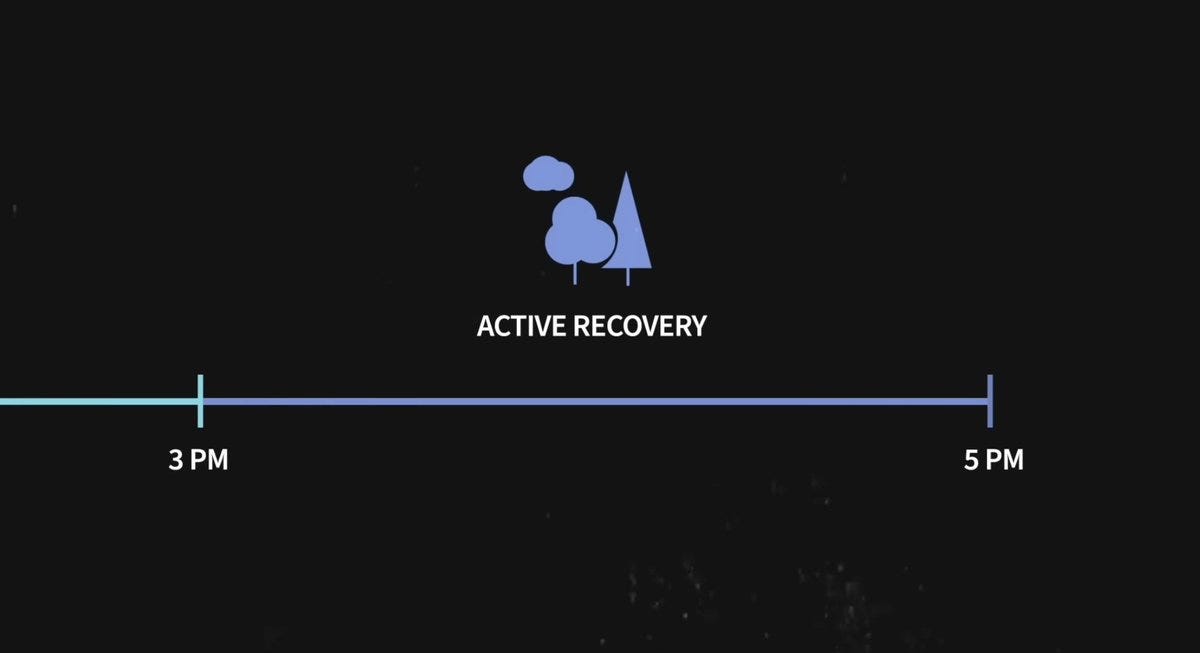
Now you’ve hit the trough. It’s time for a longer recovery session.
This deeper restoration will give you what you need for the final sprint:
Soak in a bath (hot or cold)
Have a sauna
Do a full yoga session
If you’ve planned to get a massage, this is the time. Again, be careful with coordination overhead.
We’ve still got one more flow cycle to spin through.
5:00 PM - 8:00 PM: Flow Block #4
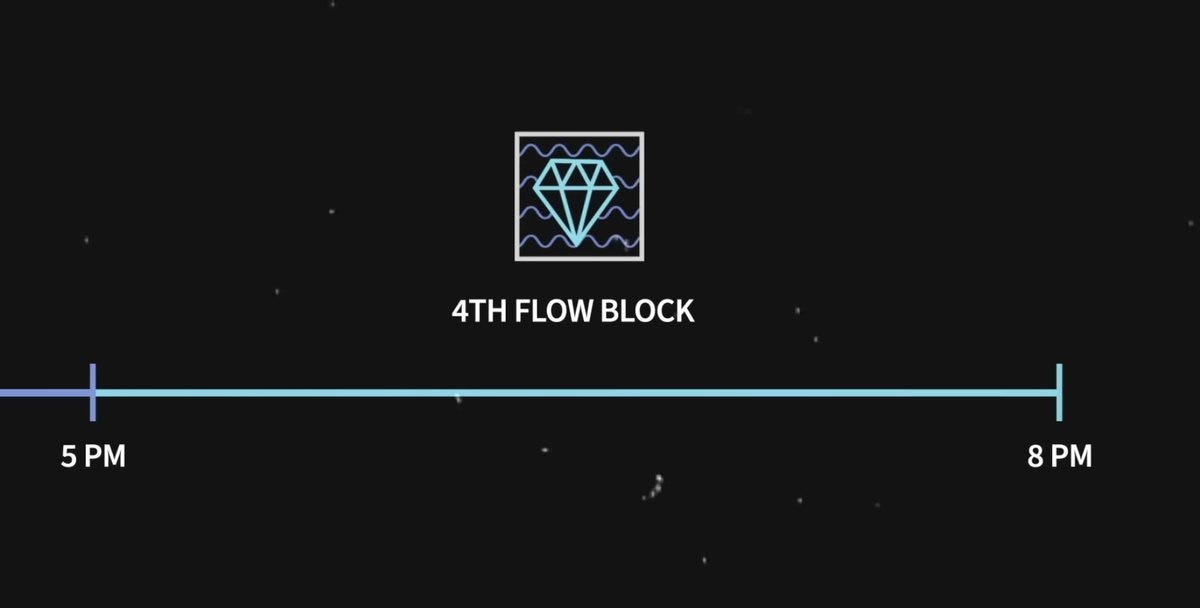
This is it!
Approach these last three hours of flow like it’s the end of a marathon.
When competing with world-class competitors, it’s that final stretch, even the last 10 seconds, that leads to victory.
Have water handy. Open the window for fresh air or crank the air conditioner to keep you vigilant. Blast some epic music to get you in the mood.
Leave nothing in the tank in this final flow sprint.
Persist and finish the day strong.
8:00 PM: Recover and Rest
Congratulations.
By flow stacking and repeatedly entering and exiting the flow cycle, you’ve managed to get eleven intense, deeply focused hours of flow into a single day.
Now it’s time to land back on earth and relish the fact that you just accomplished what most people manage in a month.
VI - Keep Your One-Month Day Sacrosanct
During the One-Month Day, as you move through one flow block after another, it’s key not to let yourself get derailed during any of your quick breaks.
The biggest saboteur of the One-Month Day is when you let its specialness erode.
Checking WhatsApp for “just a second”. Getting one quick call in. Deciding to slip in one brief 15-minute appointment.
The One-Month Day needs to be categorically distinct from any normal day you live, for it to work.
It’s like a cherished holiday tradition; you faithfully observe all the rituals that make it special.
The One-Month Day must be sacrosanct - too important, valuable, or special to be interfered with.
Make It High-Consequence
As action sports athletes can attest, a high-consequence environment demands that we summon a higher degree of skill and focus than what is typically required.
In the brain, the high-consequence flow trigger activates the amygdala, which processes emotions like fear and anxiety.
It signals to the rest of the brain that something important is at stake, thereby increasing neurochemical responses.
Adrenaline, dopamine, and norepinephrine are released, sharpening focus and reaction time.
To heighten the high consequences, ritualize the One-Month Day:
Check into your dream hotel, work in the lobby during the day
Buy the highest-end massage in the spa
Pay to make it an event - creating financial stakes makes it sacrosanct
Buy your favorite snacks, wear your favorite clothes
Schedule your favorite social gathering for the next day
Surround it with delight and incentives
Leverage the Sunk Cost Fallacy
Investing in making the One-Month Day sacrosanct leverages cognitive biases in our favor.
Once you’ve invested in setting up the perfect work conditions, your brain will fight to avoid squandering that setup.
Every second counts. You are going for an Olympian-level feat here.
VII - Keep Your One-Month Day Calendar Chokepoint Free
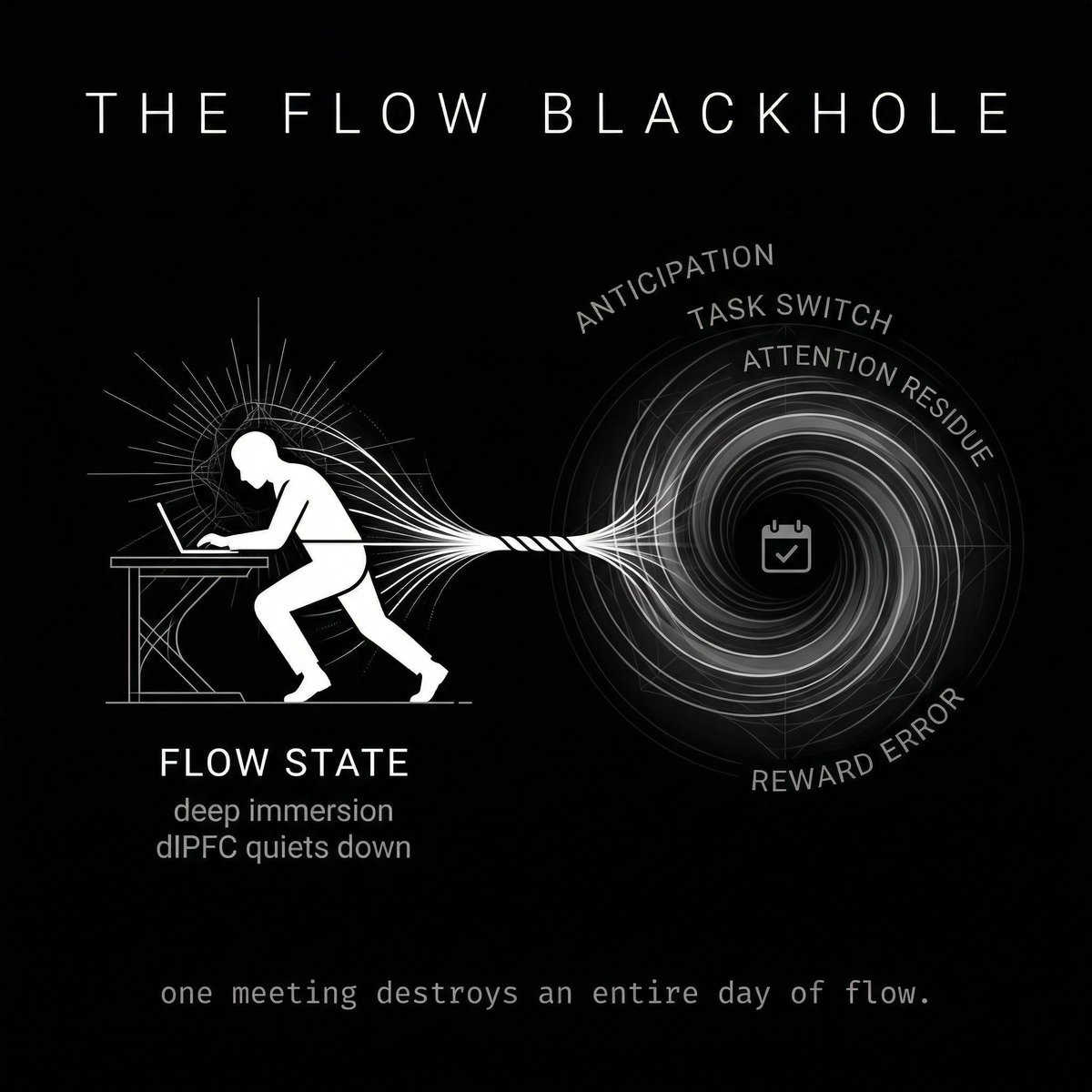
A single meeting or call, however short, can tilt the entire day.
While an open calendar allows you to get sucked into flow, a scheduled meeting acts as a calendar chokepoint - a seemingly minor obligation that fragments your day and locks you out of flow.
Flow state happens when all of your attention is fully locked into the present.
But a calendar chokepoint creates a neurological tug-of-war between now and next.
Your dorsolateral prefrontal cortex (dlPFC) is responsible for prospective time monitoring - tracking future obligations, ensuring you don’t forget what’s coming up.
The moment a meeting appears on your calendar, your dlPFC locks onto it, keeping a mental timestamp, running background processes, and subtly anchoring your attention to the upcoming event.
This creates sustained activation in the dlPFC.
And that’s the problem.
Because flow requires the opposite.
Flow happens when the dlPFC downregulates, a state called transient hypofrontality.
This is what allows deep immersion and effortless execution. It’s what lets you lose yourself in your work.
This prefrontal quieting is what allows for:
The loss of self-consciousness (you stop thinking about yourself and just act)
The merging of action and awareness (effortless, fluid execution)
Time dilation (losing track of time, minutes turning into hours)
Your dlPFC can’t power down while it’s counting down.
And because the dlPFC stays engaged, tracking the time gap, constantly recalibrating effort, you never fully let go.
And letting go is the price of admission to flow.
Think of surfing.
Would you wake at dawn, wax your board, and battle cold waves if the ocean went flat after one or two rides? There just wouldn’t be enough of a payoff for all that struggle.
It’s the same with persisting through struggle.
You rally your focus, block distractions, push through discomfort - only to get interrupted after 15 minutes. Without an uninterrupted flow session, struggle feels pointless. No waves to catch.
If you know in advance that your work will be interrupted, you subconsciously resist the struggle phase, because your brain calculates that the effort won’t be worth the reward.
Building a sandcastle on the beach feels pointless if the tide can wipe it out at any moment.
This is why even a single scheduled meeting is anathema to flow.
It’s a 30-minute meeting, but it’s a day-long alteration of your consciousness.
VIII - The Flow Afterglow
As you run the One-Month Day, you’ll feel a satisfying attentional fatigue known as the Flow Afterglow.
It’s that deeply satisfying, emptied-out feeling of accomplishment that only comes after riding the wave of flow for an extended period.
In the brain, the dopamine, norepinephrine, and serotonin of flow subsides, and you’re rewarded with relaxing and rewarding neurochemicals like endorphins and endocannabinoids.
As you learn to recognize and relish the Flow Afterglow, it becomes a self-reinforcing cycle.
The more you experience it, the more you want it, and the more you push yourself to reach new heights.
That makes it a target to shoot for, which boosts performance and achievement because you can only experience it by getting into flow and sustaining it for a long time.
For this reason, the One-Month Day is one of the biggest drivers of the Flow Afterglow.
IX - How Often Should You Run Your One-Month Day?
There are a few frequency levels you can consider:
Acceleration Mode: Run a One-Month Day Once Per Month
Start your month with an immense surge of output that builds momentum you can ride.
Turbo Mode: Run a One-Month Day Once Per Week
Do this to gain leverage that allows you to do more with less for the rest of the quarter.
Lightspeed Mode: Run a One-Month Day for 5 Days Once Per Quarter
This is for the trailblazers, the record-breakers, the “eat-my-dust” achievers.
Sometimes, this is needed to hit a book deadline, launch a new product before a competitor does, or get a new company off the ground.
In Lightspeed Mode, you can accomplish years of work in weeks.
This is how you achieve the “impossible.”
X - What Changes After Your First One-Month Day
Once you experience the One-Month Day, things will never be the same.
You’ll redefine what’s possible.
You’ll permanently shift your baseline.
The Paradox of Rest
You might worry that the One-Month Day would lead to overwork and burnout.
Paradoxically, it often leads to the opposite.
The research shows that one of burnout’s triggers is insufficient reward.
A One-Month Day gives you an extreme reward, which makes it incredibly motivating and energizing.
In fact, the upside of a one-month day is two-fold.
First, of course, there’s the progress you make on your work.
But second, there’s a broader transformative quality, a permanent elevation in your baseline performance level that carries across to the rest of your life.
You get used to performing at an elite level.
It’s like competing in an Iron Man, then jumping back into regular daily workouts - which now feel like a breeze.
Even your worst days become exceptional compared to the average.
And it also makes it harder to get overwhelmed, because you know you’re capable of handling an immense workload in an extremely short period of time.
If you have a family or a complex schedule or struggle with work-life balance, the One-Month Day is particularly useful:
You can schedule it in advance, dip out intentionally, and get a huge amount of work done all at once.
Then return to your complex personal or family life with a significantly lighter workload.
It’s the ultimate way to buy more life back if you want to work less.
If you do a One-Month Day once a week, you reclaim six days to do whatever you want.
And by having this skill in your back pocket, you gain confidence, self-efficacy, and conviction in your ability to execute - decreasing stress knowing you can deploy it whenever needed.
-Rian
This is a fascinating framework, and the core insight that per-hour output matters far more than total hours worked is one that experienced professionals who move into portfolio and fractional work often discover almost immediately. Have you found that people who have spent decades in corporate environments, where presence was often mistaken for productivity, find this the hardest shift to make?
There is so much gold in this. Thankyou for all the research and bringing it together in an easy to understand structure